
Last updated November 17, 2026







Free written scope consultation - allowances, timeline, and change-order rules on paper before a single trade is scheduled
Kitchen Remodeling Troubleshooting: Common Problems and How to Fix Them
When a cabinet door doesn’t close right six months after your kitchen remodel, the construction fix takes twenty minutes. Figuring out who pays for it, and whether your contractor is obligated to come back at all, is the part that eats months. That gap between the physical problem and the paperwork problem is where most frustration lives. In our experience across Sunnyvale kitchens, the vast majority of “contractor errors” homeowners call us about turn out to be scope-definition failures: nobody agreed in writing on what “done” looked like, so there’s no shared standard to measure against. This guide covers the five most common post-remodel problems, how to tell a warranty item from maintenance from a manufacturer defect, and how to troubleshoot the contract behind the crack.
Quick Answer
Most post-remodel kitchen problems fall into three buckets: contractor warranty items (grout failing early, cabinet boxes pulling from the wall, ventilation venting into the room), homeowner maintenance (caulk lines, seasonal wood movement, filter changes), and manufacturer defects (a fixture or appliance failing on its own). The fix depends on which bucket you’re in. The biggest predictor of whether a problem gets solved quickly is whether your contract spelled out scope, materials, and a written guarantee before work started.
Styles & brands we work with
- Kitchen remodeling
- Bathroom remodeling
- Home additions & ADU
- Roofing
- Windows & doors
- Driveway & pavers
- Fence
Table of Contents
- The troubleshooting rule: separate the construction problem from the contract problem
- Grout cracking and tile problems
- Cabinet settling and doors that won’t stay aligned
- Appliance clearance issues
- Outlet placement regret
- Ventilation underperformance
- Warranty vs. maintenance vs. manufacturer defect: how to tell which path to take
- Mid-project problems: catching scope drift before it’s buried behind drywall
- The documentation to keep during and after a remodel
The Troubleshooting Rule: Separate the Construction Problem From the Contract Problem
Every kitchen problem has two layers. The physical layer is the loose hinge, the cracked grout, the outlet in the wrong place. The contract layer is who is responsible for making it right, by when, and at what cost. Homeowners tend to fixate on the physical layer because it’s visible. But the contract layer is what determines whether a twenty-minute repair turns into a three-month headache.
Here’s how to think about it. Before you call anyone, write down three things: what the problem is, when you first noticed it, and what your written agreement says about it. If your contract has a written guarantee period, note the end date. If it lists the materials and brands specified, note them. If it says anything about how warranty calls are handled, note that too. This five-minute exercise tells you which path you’re on before you pick up the phone.
In Sunnyvale, we see this play out constantly. A homeowner in the Cherry Chase neighborhood calls about grout cracking eight months after a remodel. The contractor who did the work is unreachable. The original quote was verbal, the scope was vague, and there’s nothing in writing about grout. That’s not a construction problem anymore. It’s a documentation problem. The same crack, on a job with a written guarantee, is a phone call and a scheduled visit.
The rule is simple: a written guarantee is the difference between a repair and a dispute. If your contractor gave you one, use it. If they didn’t, you’re troubleshooting on your own, which is why we walk every homeowner through the guarantee in writing before work starts.
Grout Cracking and Tile Problems
Grout cracking is the most common call we get after a kitchen remodel. It’s almost never a sign of catastrophe, but it’s almost always a sign of something specific. Here’s what actually causes it.
- Movement in the substrate. Tile needs a stable base. If the cement board substrate (the moisture-resistant layer behind your tile) wasn’t fastened correctly or the floor framing flexes, grout cracks along the joint lines.
- Wrong grout for the application. Sanded vs. unsanded, cementitious vs. epoxy. Using the wrong type for the joint width or the moisture exposure leads to early failure.
- Missing or improper expansion joints. Tile expands and contracts. Without a gap at the perimeter, the grout takes the stress and cracks.
- Grout mixed too wet or too dry. Both weaken the cured grout and shorten its life.
- Sunnyvale’s seasonal swing. We get warm, dry summers and cool, damp winters. Wood framing and tile move with that cycle. Kitchens that face west or south take more thermal stress than north-facing rooms.
The fix depends on which cause you’re dealing with. Hairline cracks along a single grout line can often be regrouted. Cracks that run across multiple tiles, or that come back within weeks of a repair, point to a substrate problem, and regrouting won’t fix it. That’s a tear-out and re-set, which is squarely in warranty territory if the original work failed inside the guarantee period.
In our experience, a well-built tile job in Sunnyvale should hold its grout for years, not months. If it fails inside the first year, ask the contractor to inspect the substrate, not just top off the grout.
Cabinet Settling and Doors That Won’t Stay Aligned
Cabinet doors that drift out of alignment are the second most common post-remodel complaint. The good news: most are a five-minute adjustment. The bad news: some are a symptom of a bigger problem.
Start with the hinge. Modern concealed hinges, including the ones on the KraftMaid and Wellborn cabinet lines we install, have adjustment screws that let you tune the door up, down, in, and out. A door that won’t close flush is often a hinge that needs a quarter-turn. That’s homeowner maintenance. No contractor needed.
If the hinges are fine and the door still won’t close, look at the cabinet box. Is it out of square? Is there a gap between the box and the wall? Are the screws pulling out of the studs? That’s settling, and settling is usually a warranty item if it happens inside the first year. Cabinets that pull from the wall mean the mounting wasn’t anchored to framing correctly, and that’s a contractor fix.
Sunnyvale homes have another wrinkle: many were built in the 1950s through 1970s, and the walls behind the cabinets aren’t always flat or plumb. Older framing shifts. If a contractor didn’t shim and scribe the cabinets to the actual wall conditions, doors will drift. They’ll also drift more in summer, when the wood dries, than in winter, when it swells. If you notice the problem comes and goes with the seasons, that’s settling, not a defect.
Appliance Clearance Issues
Appliance clearance problems are the most expensive to fix after the fact, and the most preventable. They fall into three categories.
- Door swing. A refrigerator, oven, or dishwasher door that won’t fully open because a wall or island is in the way. This is a layout decision made on paper, and it’s the single most overlooked dimension during design.
- Ventilation clearance. Range hoods need specified clearance above the cooking surface, and cabinets need clearance from the hood. Skipping this creates a fire risk and a code problem.
- Service access. A dishwasher or refrigerator that can’t be pulled out for service because a cabinet or counter blocks it. Every appliance needs a service path.
If you catch a clearance problem before the cabinets are ordered, it’s a redraw. If you catch it after the cabinets are hung, it’s a modification, or a replacement. If you catch it after the countertops are fabricated, it can become a full tear-out. On a recent Sunnyvale job, a homeowner had chosen a larger refrigerator than the original plan allowed. We caught it during the site check, before the KraftMaid cabinet order went in. That correction cost nothing. The same problem after install would have run hundreds of dollars in cabinet modifications alone.
The fix, once you have a clearance problem: measure the actual opening and the actual appliance, not the spec sheet. Then talk to the contractor about whether the cabinet run can be modified or whether the appliance needs to change. Catching it early is the whole game.
Outlet Placement Regret
Outlet placement is the problem that quietly annoys homeowners for years, because the fix requires drywall work. It’s the single most common “I wish we’d thought of that” call we get.
Where does it come from? During rough-in, outlets get placed based on the plan, not the eventual countertop use. A homeowner plans for a coffee maker, then realizes the espresso machine needs to live on the other counter. A family plans for a toaster, then realizes the air fryer and the stand mixer both need outlets in the same corner. Code requires outlets at specific intervals along a counter, but code is a minimum, not a design.
If the drywall is still open, adding an outlet is a same-day electrician visit. If the backsplash is already set, it’s a different story: tile removal, new wiring, new tile patch. Expensive. That’s why we walk the kitchen with a homeowner before closing up the walls and mark the outlet locations with the actual appliances in mind.
If you’re living with an outlet regret now, you have three options. Add a surface-mounted raceway (quick, visible, functional). Add an outlet into the backsplash (moderate cost, matches tile). Or live with it and use a countertop power strip (cheap, temporary). None are ideal, which is why the right answer is to catch it before the drywall closes. And in Sunnyvale, kitchens built before the 1980s often have fewer circuits than a modern kitchen needs. If your outlet placement is bad, it’s worth asking the contractor whether the circuit count is part of the problem too.
Ventilation Underperformance
A ventilation system that doesn’t work is a safety issue, not just an inconvenience. Here’s how to diagnose one.
- Smoke lingers after cooking. The hood isn’t moving enough air, or the duct is undersized, or the duct run has too many elbows.
- Grease builds up on the tops of cabinets. The hood is capturing, but not exhausting. Grease-laden air is recirculating into the room.
- The hood is noisy but weak. A short duct or a duct with a tight bend creates back pressure that limits airflow.
- You can feel air moving at the hood but not out of the house. The duct is disconnected at a joint, or it’s venting into the attic.
Underperformance almost always comes down to three things: undersized duct, excessive bends, or a hood rated below what the kitchen demands. Codes require a certain exhaust rate for a given range, and a contractor who installs a hood without checking the duct path is setting up a call. In Sunnyvale, the older housing stock has an additional wrinkle: many homes have attic or roof configurations that make a straight duct run difficult, and a lazy duct route produces a lazy hood.
If you have a ventilation problem, don’t try to fix it by adding a booster fan. That makes noise and rarely solves the underlying duct issue. The right fix is to trace the duct run from hood to exterior, verify the size and the connection, and if needed, reroute. That’s a contractor job, and it’s a warranty item if the original install was defective.
Warranty vs. Maintenance vs. Manufacturer Defect: How to Tell Which Path to Take
Before you call, figure out which bucket the problem falls into. The three paths lead to completely different phone calls.
Contractor warranty items are failures of installation: grout that fails inside the guarantee period, cabinets that pull from the wall, a hood that vents into the room, a door that won’t latch. These are the items a contractor committed to get right, and they belong with the contractor.
Homeowner maintenance items are the things that need attention over time: caulking around the sink, grout sealing, filter changes, seasonal hinge adjustments. These aren’t failures. They’re upkeep, and no contractor is obligated to handle them for free.
Manufacturer defects are failures of the product itself: a fixture that leaks at the cartridge, a drawer glide that bends under normal load, an appliance that fails on its own. These go to the manufacturer’s warranty, not the contractor, though the contractor is often the fastest path to filing the claim. This is where brand quality actually matters. We install Kohler and Moen fixtures and Cambria, Silestone, and Caesarstone countertops because those manufacturers stand behind the product alongside our own written guarantee. A manufacturer’s lifetime warranty plus a contractor’s written one is two layers of protection, not one.
If you’re not sure which bucket you’re in, ask the contractor directly: “Is this covered by your written guarantee, or is this maintenance?” A contractor who gives you a clear answer in writing is one you can work with. One who dodges the question is telling you something too.
Mid-Project Problems: Catching Scope Drift Before It’s Buried Behind Drywall
The most expensive time to discover a problem is after the drywall goes up. That’s when a disagreement about scope becomes a disagreement about whether to tear the wall open again. If you’re mid-project, here’s what to do.
- Walk the site weekly. Compare what’s actually there to the written scope, line by line. Not what you remember discussing. What’s on paper.
- Catch discrepancies before the next phase starts. Once the drywall covers the framing, the electrical, or the plumbing, the cost to correct goes up fivefold.
- Put every change in writing. A verbal “can you move the outlet over” becomes a free change one day and a change order the next. Ask for a written change order that states the cost and the schedule impact. Every time.
- Photograph the open-walls phase. Before drywall closes, take pictures of the framing, the plumbing, the electrical runs, and the insulation. A photo from week six answers questions in month eleven.
- Raise it early, not politely. A homeowner who quietly tolerates a discrepancy and mentions it at the final walk-through has no leverage. A homeowner who raises it in week two has plenty.
In Sunnyvale, older homes often have surprises behind the wall: previous remodeling work, undersized wiring, plumbing that doesn’t match the original drawings. Those surprises belong in the change-order conversation, in writing, before the wall closes. If a contractor wants to handle it verbally, say no. Always in writing. If the work in progress doesn’t match the scope you agreed to, stop the project and put the discrepancy in an email. You want a timestamped record, not a memory.
The Documentation to Keep During and After a Remodel
Every dispute is a paperwork problem in disguise. If you keep the right records, any problem you have will be solvable. If you don’t, you’re reduced to what you remember. Here’s what to keep.
- The written estimate or quote, with line items. Not a verbal number. Not a range.
- The signed scope of work, listing exactly what’s included, what’s excluded, and what materials and brands are specified.
- The written guarantee, with the guarantee period, what’s covered, and how to invoke it. If it doesn’t say what’s covered, ask for a version that does.
- All change orders, with a date and a cost.
- Product documentation: the manufacturers’ warranty booklets, the model and serial numbers of every appliance and fixture, and the specification sheets for tile, countertop, and cabinetry.
- Photos of the open-walls phase, taken before drywall closes.
- A dated log of any problems you raise, with what you said, when, and what the contractor said back. Email is best, because email timestamps itself.
Keep it all in a single folder, digital or paper. If a problem comes up six months later, that folder is the difference between a phone call and a fight. This is the reason we put the price, the scope, and the guarantee in writing before any work starts, and it’s the reason we can say the number on day one is the number on the invoice.
Common Mistakes to Avoid
- Starting with a verbal estimate. A verbal quote and a plan change become “you agreed to that” versus “I never agreed to that.” Get the number in writing before anything is ordered.
- Skipping the drywall-open walkthrough. If you don’t look at the kitchen before the walls close, you can’t catch a bad outlet placement or a misplaced rough-in.
- Assuming “warranty” means “everything.” Ask the contractor what the written guarantee actually covers. Caulk lines and grout-sealing are usually maintenance, not warranty.
- Tolerating a verbal change order. Every change in scope, size, or material needs a written change order. No exceptions.
- Ignoring the seasonal movement problem. Sunnyvale’s seasonal swing causes wood and tile to move. If a door or grout line drifts seasonally, that’s not a defect. A contractor who explains that in person is being honest with you.
- Forgetting the appliance dimensions. Measure the real appliance, not the spec sheet, before the cabinet order goes in. Catching the mistake before install is the difference between a redraw and a rebuild.
- Not keeping the product documentation. Without the manufacturer booklet and model numbers, a manufacturer defect becomes a paperwork hunt. Keep it in one folder.
See the difference
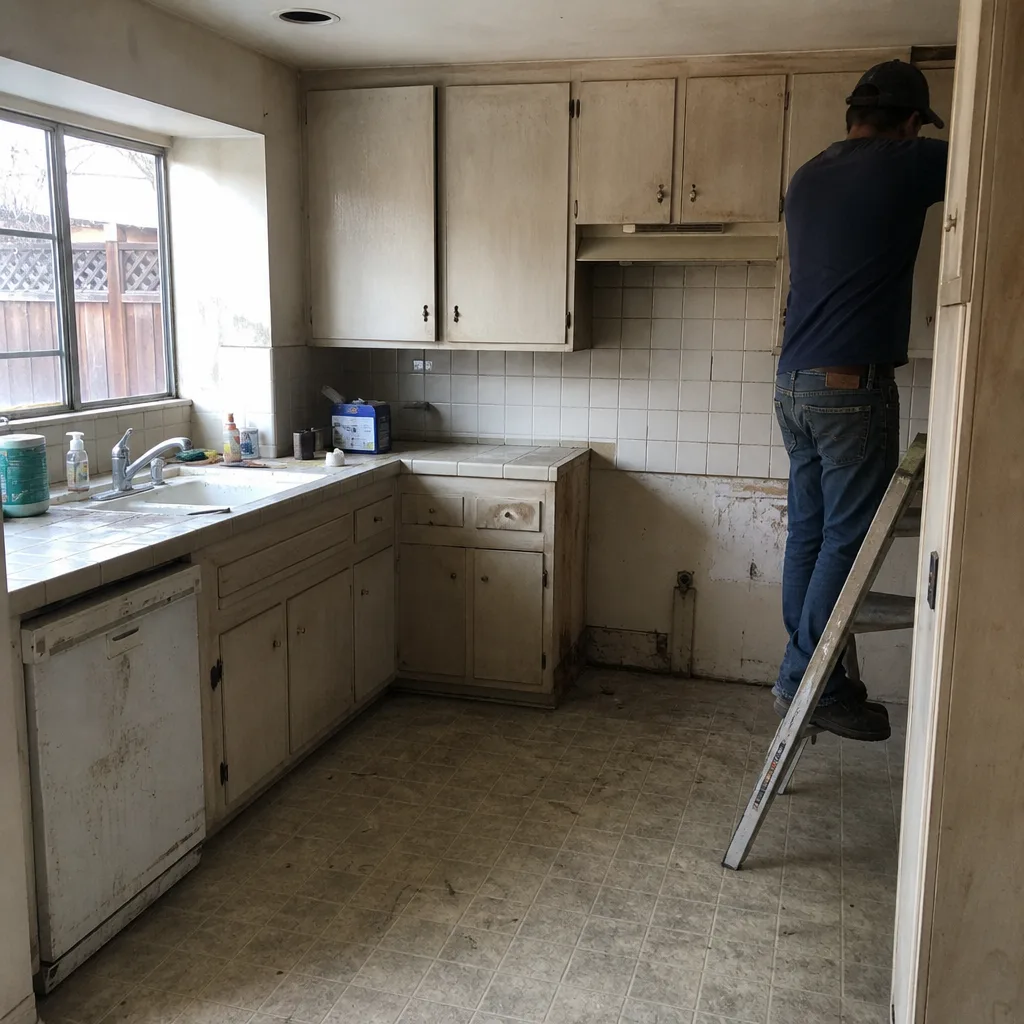 Before
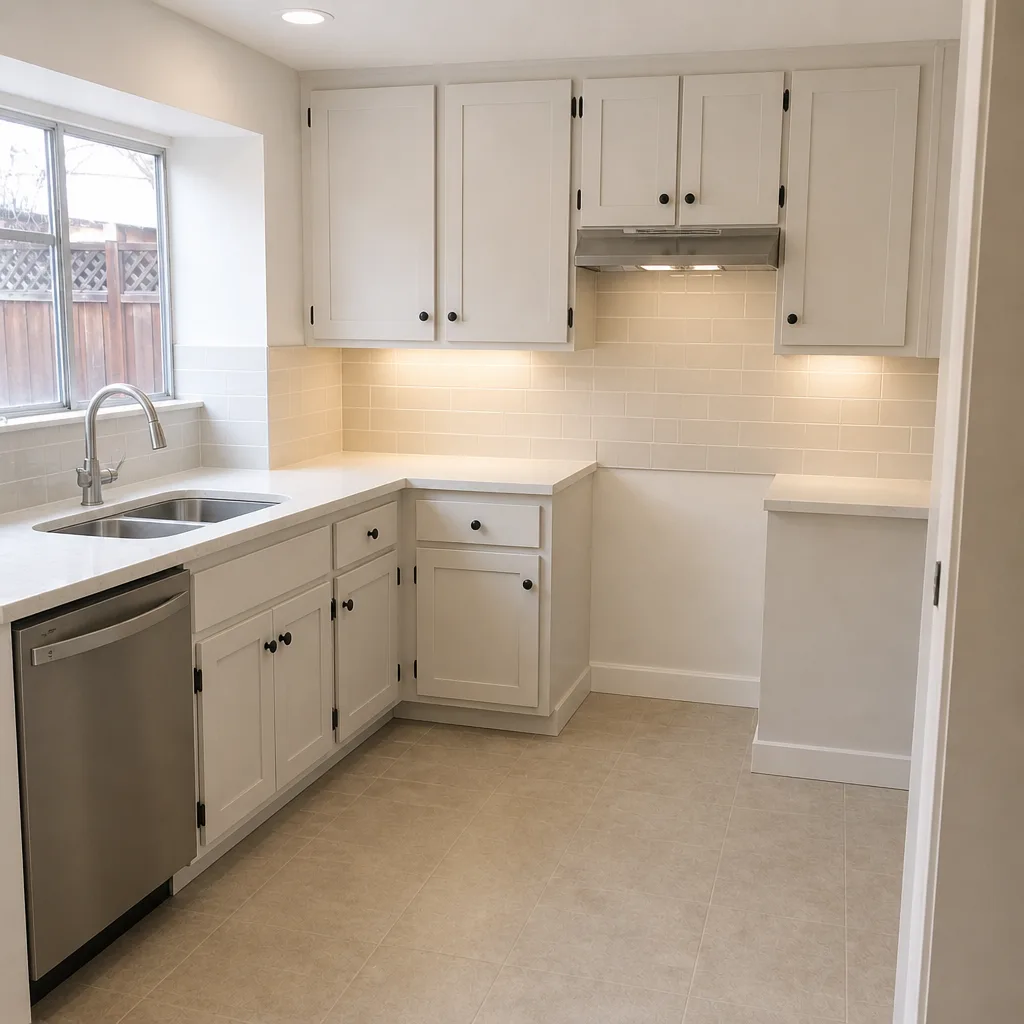 After
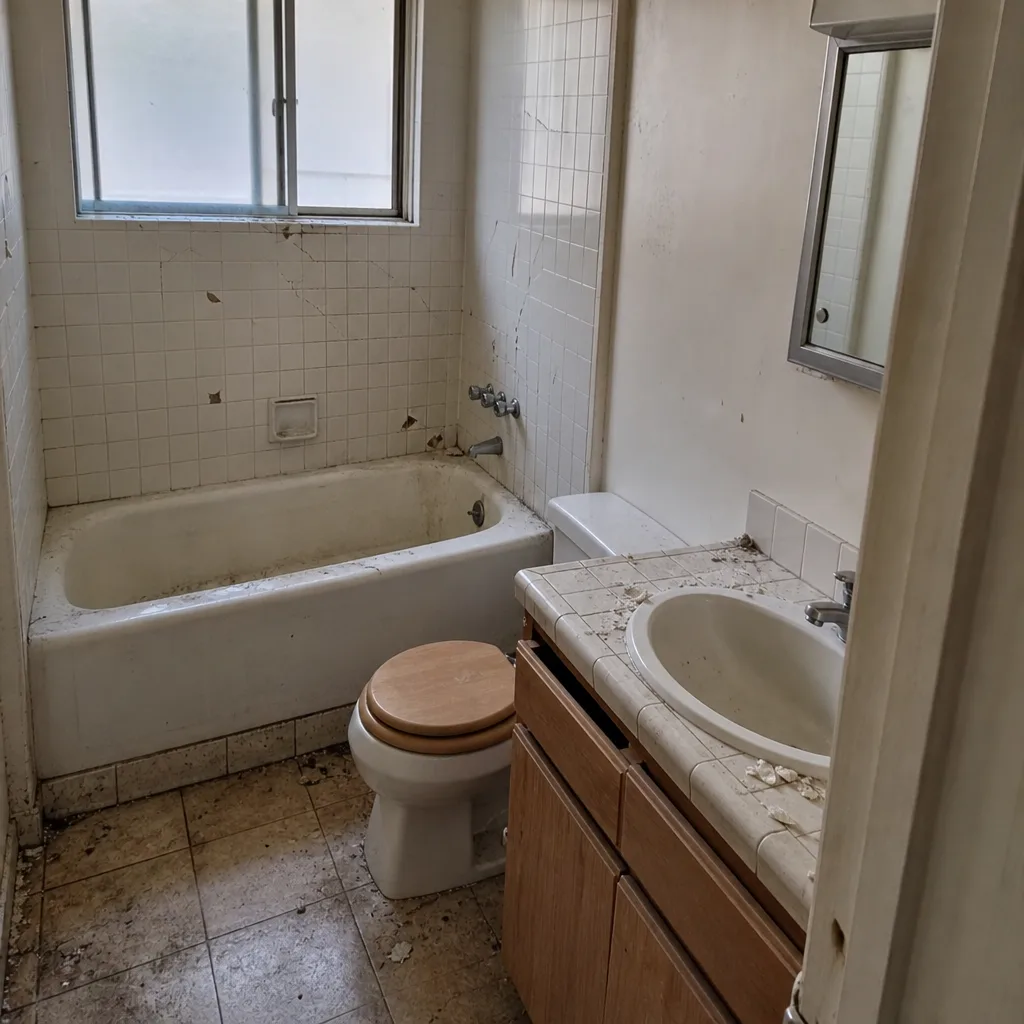 Before
 After
 Before
 After
When to Call a Professional
Some problems are a screwdriver and five minutes. Others need a trained eye and a truck. Call a professional for anything involving opening a wall, moving electrical, changing a duct, or a tile failure that comes back after a repair. Call a professional if the problem is inside the first year after your remodel and the original contractor is unreachable, because that’s the point where a written guarantee on your new work matters most. Call a professional if a cabinet has pulled off the wall, if the hood is venting into the room, or if a problem is causing a safety concern with gas or electricity. Don’t diagnose the cause yourself if it involves a gas line or a panel, because the cost of getting that wrong is higher than the cost of a visit. The team at Penhallow Remodeling Sunnyvale offers free estimates in Sunnyvale. Call (888) 426-8719. A live person answers, and the visit doesn’t cost anything.
Frequently Asked Questions

It depends on whether the fix is warranty, maintenance, or manufacturer. A hinge adjustment is typically homeowner maintenance and free. A regrout on a single grout line runs a few hundred dollars if it’s out of warranty. A tile tear-out for a substrate problem can run into the thousands. If the original work is covered by a written guarantee, the cost is zero to you. Call (888) 426-8719 and we’ll walk through which category your problem falls into before anything is priced.
Not if the price and the scope are in writing before work starts. The most common reason a kitchen price changes mid-job is scope that was never defined: the homeowner expects one thing, the contractor built another, and the difference surfaces after demo. If you start with a written price and a written scope, the number on day one is the number on the invoice. If a change comes up, it should come with a written change order you can approve or decline.
A mid-size kitchen remodel typically runs six to twelve weeks, but the schedule depends on cabinet lead times, permit turnaround, and whether the home has surprises behind the walls. Older Sunnyvale homes, especially the ones built before the 1980s, often uncover wiring or plumbing conditions that need a fix before the drywall closes. Ask for a schedule with milestones in writing, not just a start date. Call (888) 426-8719 for a free estimate with a realistic timeline.
Yes, because a written guarantee gives both sides a standard to measure against. A guarantee that states what’s covered and for how long turns a dispute into a scheduled visit. Under the 365-Day Done Right Promise, if the work fails inside the guarantee period, we come back and fix it at no charge. The guarantee is included in writing on every project, and the terms are stated upfront, not after a problem comes up.
The manufacturer’s warranty handles manufacturer defects, and the contractor handles installation failures. A fixture that leaks because the cartridge is defective is a manufacturer issue. A fixture that leaks because the connection was installed wrong is a contractor issue. Keep the model and serial numbers and the warranty booklets from the start, because the manufacturer can’t help you without them. We install products from brands like Kohler, Moen, and Cambria because those manufacturers stand behind their products, which adds a second layer of protection behind the contractor’s own written guarantee.
You know by looking at what you signed. A written guarantee with a stated period and clear coverage means the contractor is obligated. A verbal promise does not. If your contractor gave you a written guarantee and is disputing a claim, put the request in writing, quote the clause from the guarantee, and give a specific date for them to respond. If it’s inside the guarantee period and they won’t honor it, that document is your leverage. Call (888) 426-8719 for a free estimate on a second opinion. Estimates are free, and we’ll tell you in plain terms what’s warranty and what isn’t.
The Bottom Line
Most kitchen remodeling problems are solveable in an afternoon. The ones that aren’t are almost always the ones where nobody agreed in writing on what “done” looked like. The five problems we covered, from cracked grout to weak ventilation, each fall into a category: contractor warranty, homeowner maintenance, or manufacturer defect. Knowing which path to take is the difference between a phone call and a months-long fight. If you’re considering a kitchen remodel in Sunnyvale, or troubleshooting one that’s already done, start with a written price, a written scope, and a written guarantee. That’s the paperwork that makes everything else fixable. And if a problem has already surfaced and you’re not sure which path you’re on, call us for a free estimate.
If you’re ready to talk through your own kitchen, or you’re considering a project and want to understand the scope and price before anything is ordered, call Penhallow Remodeling Sunnyvale at (888) 426-8719 for a free estimate. We’ll walk the space with you, put the number in writing, and explain exactly what the guarantee covers. If you’re still in the early research stage, our guide to Kitchen Remodeling in Sunnyvale walks through what a well-built kitchen involves, and our team can help you plan a remodel alongside any Bathroom Remodeling in Sunnyvale or whole-home scope, all coordinated through the General Contractor in Sunnyvale role we handle. Our team has up to 22 years of experience with projects like these, backed by the 365-Day Done Right Promise and a written guarantee on every job. Get to know our approach by visiting the Penhallow Remodeling Sunnyvale home, and if you’re exploring the wider Bay Area, we’re glad to talk through what’s different about working with a general contractor in Sunnyvale.
Written by the team at Penhallow Remodeling Sunnyvale.