Last updated November 17, 2026

Free written scope consultation - allowances, timeline, and change-order rules on paper before a single trade is scheduled
DIY vs Professional Bathroom Remodeling: What’s Safe to Do Yourself
You can tile a shower yourself. California law won’t stop you. But here’s the part most homeowners don’t hear until after the fact: if the waterproofing membrane under those tiles was installed wrong and your shower leaks into the subfloor, your homeowner’s insurance will ask one question before it pays a claim – was the work permitted and inspected? That single question is where the DIY boundary in bathroom remodeling actually sits, and it isn’t drawn around skill. It’s drawn around what’s hidden, what’s cumulative, and what’s catastrophic when it fails. In this guide we’ll map exactly where that line falls, which tasks you can genuinely handle, and how to structure a hybrid project that keeps the savings while keeping your house dry and your resale clean. If you’re remodeling in Sunnyvale, the local permit rules matter more than you’d think.
Quick Answer
In California you can legally remodel your own bathroom as an owner-builder, but anything that touches the drain, the water supply lines, or the electrical must be done by a licensed contractor and signed off by inspection. Safe DIY tasks are the surface work – painting, swapping a vanity mirror, replacing a toilet seat, installing finish hardware and accessories. Waterproofing the shower, moving a drain, and running new circuits are the three things that reliably go wrong when done by anyone without training. Everything in between is where a hybrid project saves real money.
Styles & brands we work with
- Kitchen remodeling
- Bathroom remodeling
- Home additions & ADU
- Roofing
- Windows & doors
- Driveway & pavers
- Fence
Table of Contents
- What California’s Homeowner Exemption Actually Lets You Do
- The Tasks Where DIY Is Genuinely Safe
- The Waterproofing Problem: Highest-Consequence DIY Risk
- What a Bathroom Permit Inspection Actually Checks in Sunnyvale
- How to Structure a Hybrid Project That Saves Money
- Permits, Insurance, and Resale: Why the Paper Matters More Than the Work
- Real Cost Ranges for DIY vs Licensed Work in Sunnyvale
- Common Mistakes to Avoid
What California’s Homeowner Exemption Actually Lets You Do
California’s owner-builder exemption allows a homeowner to pull permits and perform work on their own primary residence without holding a contractor’s license. That’s real, and it’s the legal basis for every weekend bathroom remodel you’ve seen on a home-improvement channel. But the exemption comes with sharp conditions, and what it does not permit is where most people get tripped up.
For one thing, you can only claim the exemption on a home you occupy as your residence. You can’t use it on a rental or a flip you’re selling. For another, when you sell that home, the exemption doesn’t travel with it – the work becomes a disclosure item, and if it was never inspected, you’re now the person who has to explain the unpermitted wet room to a buyer’s inspector. In our experience, that conversation costs far more than the tile job saved.
Here’s what the exemption does and doesn’t let you skip:
- You can pull permits in your own name and act as the person performing the work.
- You can hire licensed subcontractors – the plumber, the electrician – to handle the regulated trades, and still be the owner-builder of record.
- You cannot skip the permit itself just because you’re the one doing the work.
- You cannot avoid the plumber and electrician on work that touches the drain, supply, or circuits – those trades require a license regardless of who owns the home.
- You cannot use the exemption on a home that isn’t your primary residence, and in most cases you cannot use it on a multi-unit property.
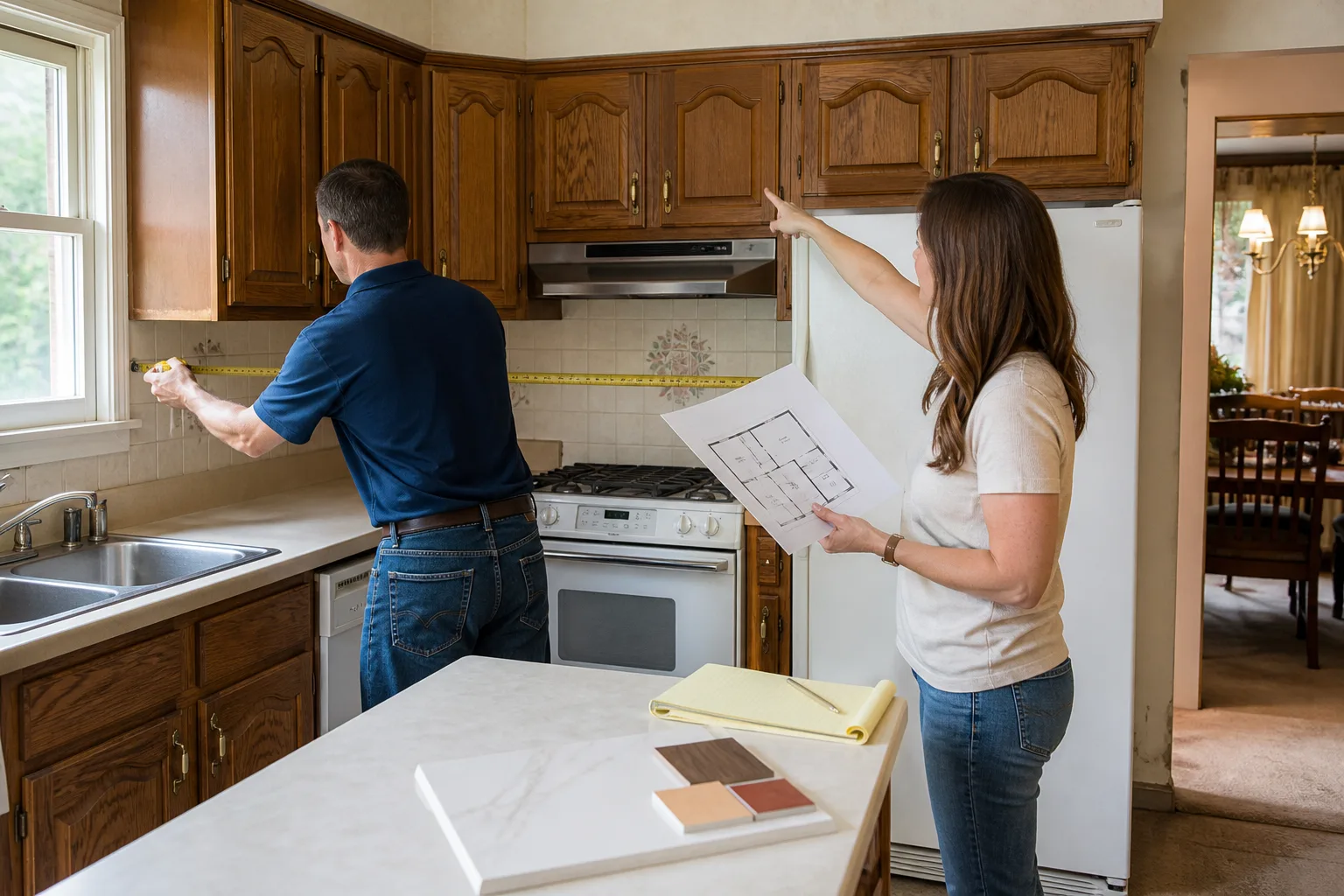
If you’re unsure whether your project is a “permit required” job, that’s one of the questions a licensed General Contractor in Sunnyvale answers in the first five minutes of a walkthrough – before anyone picks up a tool.
The Tasks Where DIY Is Genuinely Safe
We’re not going to pretend there’s no room for a homeowner to work on their own bathroom. There is, and it’s the layer that doesn’t touch water or electricity. The safe-DIY list is short, but it’s the part that makes the bathroom feel like yours and saves a meaningful chunk of a contractor’s labor line without risking the structure.
The tasks we routinely see homeowners do well, and that we tell callers to feel free to handle:
- Painting. Bathroom paint needs a mold-resistant finish and a proper primer, but the technique is the same as any interior wall. Prep is the only real work.
- Vanity mirror swaps. If you’re replacing a mirror that already has a mounting point, this is a 30-minute job. If you’re moving the mirror across the wall, call it a lighting/electrical task and stop.
- Toilet seat replacement and lid swaps. Pure hardware removal and reinstall. Very low risk.
- Finish hardware. Towel bars, robe hooks, toilet paper holders, cabinet pulls, shower curtain rods. If it mounts to drywall or cabinet face and doesn’t touch a pipe, it’s fair game.
- Accessory and decor installation. Shelving (into studs), bath mats, freestanding storage, framed art.
- Caulk refresh on already-sealed joints. Scraping out a failing line of silicone around an existing, previously installed tub or shower surround and re-running it with a quality bath caulk is safe and satisfying work. Re-caulking is not a substitute for the waterproofing layer – hold that distinction.
The tasks that look safe on YouTube and are not: removing a shower valve trim to “just replace the cartridge” on a wall you can’t shut off from a local valve, cutting into drywall to find a stud for a heavy mirror, or trying to redo grout without addressing the substrate underneath. Those are the calls that turn a $40 Saturday into a $3,800 emergency.
The Waterproofing Problem: Highest-Consequence DIY Risk
Shower waterproofing is the single highest-consequence element in a bathroom, and it’s the one most homeowners can’t verify after they’ve done it. When you install a waterproofing membrane – the thin, flexible layer that goes behind the cement board and tile – you’re creating a continuous barrier whose only job is to keep water out of the framing. If it’s installed with a pinhole gap at a corner, a nail strike at a fixture, or a seam that didn’t seal, that pinhole leaks a few drops every shower. The tile looks perfect. The grout looks perfect. The wall behind it rots for six to eighteen months before you see a stain on the ceiling below.
That’s what we mean by hidden, cumulative, and catastrophic. A plumbing leak you can usually catch – you see the drip. A waterproofing failure you don’t catch until the shower has been quietly eating the framing and the subfloor for a year. In Sunnyvale’s climate the compounding is actually slower than in a humid coastal town, which sounds like good news but isn’t: it just means the failure takes longer to show, by which time the repair scope has grown. We’ve torn out Sunnyvale showers where the tile was three years old and the paper-faced drywall behind it had the structural integrity of wet cardboard.
Products like Schluter’s Kerdi system, which is what we install on most wet-room jobs, are engineered for a reason: they rely on a specific membrane, specific thinset, and specific overlap at every seam and corner. The installation method is the product. Install the right Schluter membrane with the wrong thinset, or skip the corner seals, and you’ve built a shower with a product name on it and none of its protection. That’s why waterproofing is the layer we push hardest on when a homeowner wants to do their own tile – the tiles are replaceable, the membrane failure is not.
What an inspection verifies, and what it doesn’t
An inspection verifies that the membrane was installed prior to tile and that it matches the permitted plan and the manufacturer’s method. It does not verify that it will hold water for twenty years. It verifies the paper trail exists – which is, in resale and insurance terms, the more important of the two. More on that below.
What a Bathroom Permit Inspection Actually Checks in Sunnyvale
Sunnyvale, like most Santa Clara County cities, runs bathroom remodels through a permit and inspection process. When a bathroom is gutted to the studs, the inspection sequence usually runs roughly in this order:
- Rough plumbing and electrical. Before drywall goes up, the inspector checks the supply and drain runs, venting, and the electrical rough-in – outlet placement, GFCI protection in wet locations, and exhaust fan wiring.
- Framing. If walls are being moved or a tub alcove is being altered, the framing is checked, in some cases including the load path.
- Waterproofing. This is the wet-area inspection, and it’s the one most homeowners who go DIY skip or never pull a permit for. It’s also the one that protects you later.
- Final. The finished bathroom, with fixtures set, exhaust venting functional, and all work matched against the permitted scope.
The important point: an inspector is not sign-off on quality. They’re sign-off on scope and code compliance. A bathroom can be inspected and look just average, and a bathroom can look beautiful and never have been inspected once. But the inspection record is what insurance and buyers rely on because it establishes when and by whom the work was reviewed. In Sunnyvale, that record is searchable, and it’s the first thing a buyer’s agent pulls after a home inspection flags anything in the bathroom.
Sunnyvale’s building department is straightforward to work with, and pulling a permit for the wet-area work is not a large expense relative to the cost of the bathroom. What it buys you is an inspection trail that survives the sale of the house. What you give up by skipping it is the same trail – and that’s the trade most DIY remodels make and later regret. If you’re planning a project with a permit pulled, this is where a Bathroom Remodeling in Sunnyvale contractor earns their fee: not the tile, but the coordination of the permit and the inspection sequence that keeps the project moving.
How to Structure a Hybrid Project That Saves Money
The smartest split we’ve seen is not “do it all yourself” or “hand over everything.” It’s a layered project. The licensed trades do the regulated work, a tile contractor handles the wet areas, and the homeowner keeps the finish items. Done well, this saves real money – here’s the structure and the realistic savings on each layer.
The hybrid sequence
- Licensed plumber: rough-in drain and supply, valve location, tub or shower pan set. Redoing a bad rough-in is the most expensive correction in the project – don’t touch it.
- Licensed electrician: new circuits, GFCI, exhaust fan, and lighting. This is the second nonnegotiable trade. Electrical work in a wet location is not a homeowner task.
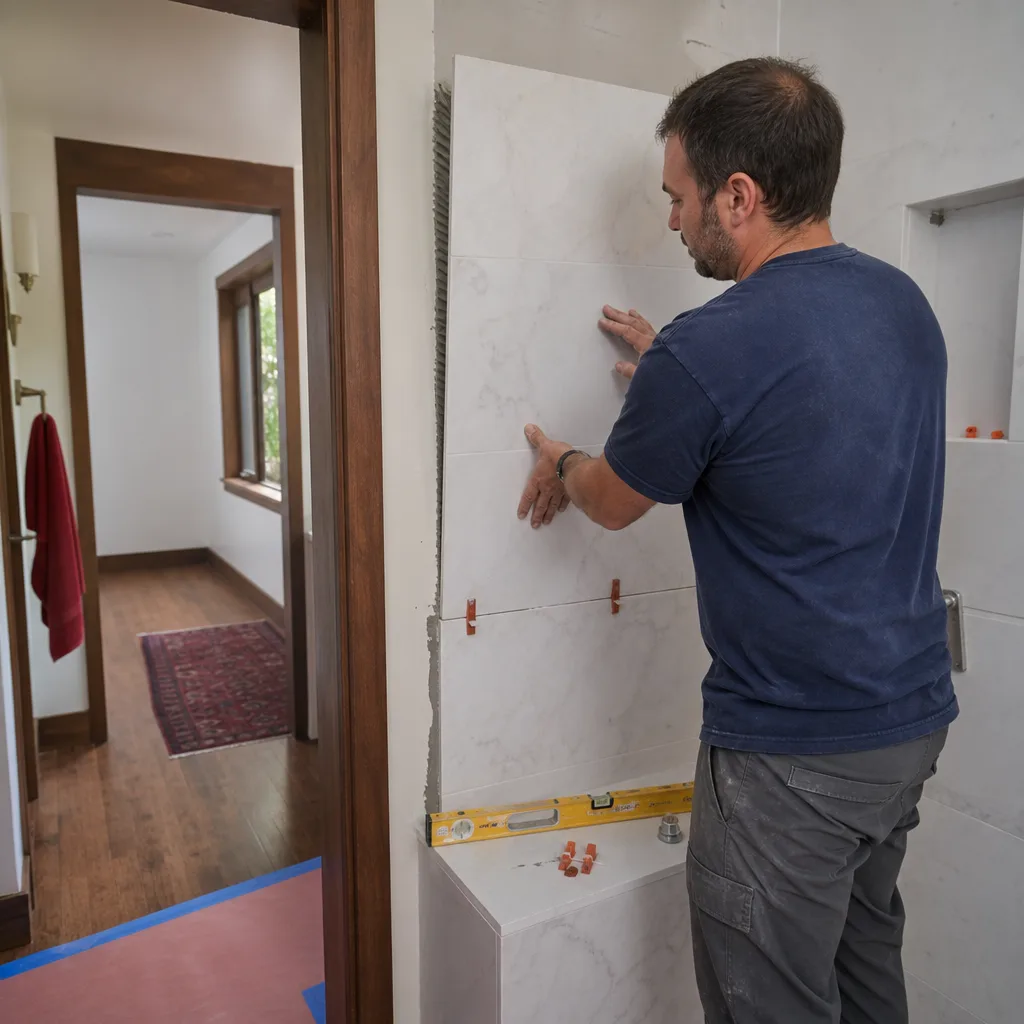
- Licensed tile contractor or waterproofing installer: membrane, cement board substrate (the moisture-resistant layer behind your tile), and tile installation. If you want to tile over an already-inspected, correctly installed substrate, that’s a legitimate DIY project – but understand the membrane went in first, and understand who’s on the hook if it fails.
- Homeowner layer: paint, mirror, finish hardware, accessories, caulk, and decor. This is where you save without risking the structure.
- Final inspection: the licensed trades coordinate this. Your finish work happens after.
Realistic savings by layer
- Doing your own paint and finish hardware: savings in the low hundreds of dollars on a full bathroom. Small, but safe, and it’s the part that affects how the room feels.
- Doing your own trim carpentry (baseboard, door casing): savings in the hundreds, but only if the trim goes in after the licensed finish work is done. Cabinet-grade install is real work.
- Doing your own tile over a professionally installed substrate: a real chunk of the labor line, but only when the waterproofing has already been installed and inspected by a licensed trade. Skip that step and you’ve removed the one layer you can’t afford to gamble on.
- Doing your own waterproofing and rough-in: we don’t quote this as a savings category because it isn’t one. It’s a gamble on a hidden failure that costs, in a typical Sunnyvale home, several times the labor it “saved.”
The bathroom lines up with the same logic a good Kitchen Remodeling in Sunnyvale project uses: the licensed trades and the substrate are the frame; the finish is where the homeowner can take the wheel.
Permits, Insurance, and Resale: Why the Paper Matters More Than the Work
We’ll be blunt about this because it’s the part most DIY bathroom guides don’t say out loud. The work quality is not what protects you. The paper is. When you sell a home in Sunnyvale, the standard disclosure asks about permitted work, and a bathroom remodel – particularly one that moved plumbing or added electrical – is a disclosure item. If the work was permitted and inspected, you have a record. If it wasn’t, you’re now the person who has to explain why the wet area was never inspected, and the buyer’s inspector will almost certainly pull the shower apart to check.
On a claim, insurance is a different calculation. Water damage from a shower that failed because of unpermitted, uninspected waterproofing is exactly the sort of claim insurers scrutinize. Some will cover it and then not renew. Some will deny it as a maintenance issue. The difference between “it was permitted and inspected” and “I did it myself” is not moral – it’s evidentiary, and it’s the difference between a check and a letter from the adjuster.
This is the same reason we put the price and the guarantee in writing up front. The Kingswell Way is built around a simple sequence: say the price before the work, show up in the window we gave, leave the place cleaner than we found it. A written price before work starts, a written guarantee on every project, and a 365-Day Done Right Promise don’t mean much if the underlying work wasn’t permitted and inspected. They mean everything when it was.
Real Cost Ranges for DIY vs Licensed Work in Sunnyvale
Prices in Sunnyvale reflect Silicon Valley labor and permit costs, which are higher than most of the country. Here’s how the line items break down for a typical full bathroom remodel, with the owner-builder path versus the licensed path called out.
- Plan and permit (Sunnyvale): $300-$800. Pay this. It’s the smallest line item and the one with the biggest resale impact.
- Plumbing rough-in (licensed): $1,800-$4,500 depending on whether the drain and valve locations move. Do not DIY this.
- Electrical rough-in (licensed): $800-$2,200 depending on circuit additions, exhaust fan, and GFCI scope. Do not DIY this.
- Waterproofing and tile substrate (licensed, Schluter-style membrane system): $1,200-$3,000. Do not DIY this.
- Tile installation: $2,500-$6,500 for a typical Sunnyvale full bath. DIY-possible over an inspected substrate, but budget the time at 3-4 weekends minimum, plus the tile saw and the learning curve.
- Vanity and fixtures (Kohler, Moen, Grohe range): $1,400-$5,000 depending on the fixture tier. Vanity cabinet install is a legitimate homeowner task; fixture connections should be done by a licensed plumber.
- Paint, mirror, hardware, trim: $400-$900 in contractor labor – this is the layer we tell homeowners to keep for themselves.
A full licensed bathroom remodel in Sunnyvale typically runs $18,000-$42,000 depending on the wet-area scope, fixture tier, and whether the layout moves. A well-run hybrid project with the homeowner doing finish work lands at the lower end of that range. A full DIY project that skips the permit and the wet-area inspection is not cheaper in any way that matters – it’s just cheaper on the day, and more expensive on the resale.
Common Mistakes to Avoid
- Skipping the permit because “it’s just a bathroom.” Sunnyvale’s permit process for wet-area work is the cheapest part of the project and the most valuable record. Skipping it turns a simple resale disclosure into a problem you have to solve in escrow.
- Treating waterproofing as a tile task. The membrane is not tile. It’s the barrier under the tile, and it’s the only layer that can’t be seen or checked by anyone who isn’t there when it’s installed.
- Moving the shower valve for a new tile layout without checking the plumbing wall. This is a common Sunnyvale issue in 1970s-80s homes where the valve wall is a shared partition. Move it without a plumber and you’ll find out on the day the wall is open.
- Buying pre-mixed thinset for a wet area. It’s convenient and it’s wrong. Wet areas need a modified, unmixed thinset that matches the membrane manufacturer’s spec.
- Installing a heavy mirror into drywall anchors. Heavy glass mirror over a vanity in a Sunnyvale home needs blocking or a stud, not a toggle bolt. Drywall failure under a mirror is dangerous.
- Planning the finish work before the inspection sequence. You can’t paint and caulk a bathroom before the rough and waterproofing inspections pass, and if you do, the inspector will have to see the membrane through the finish. Sequence the finish layer last, always.
- Assuming a permit is a rubber stamp. It’s a sequence. Rough, waterproofing, final. Miss one and the project stalls at the next one. This is exactly the coordination a contractor manages on a bathroom project so the homeowner doesn’t have to.
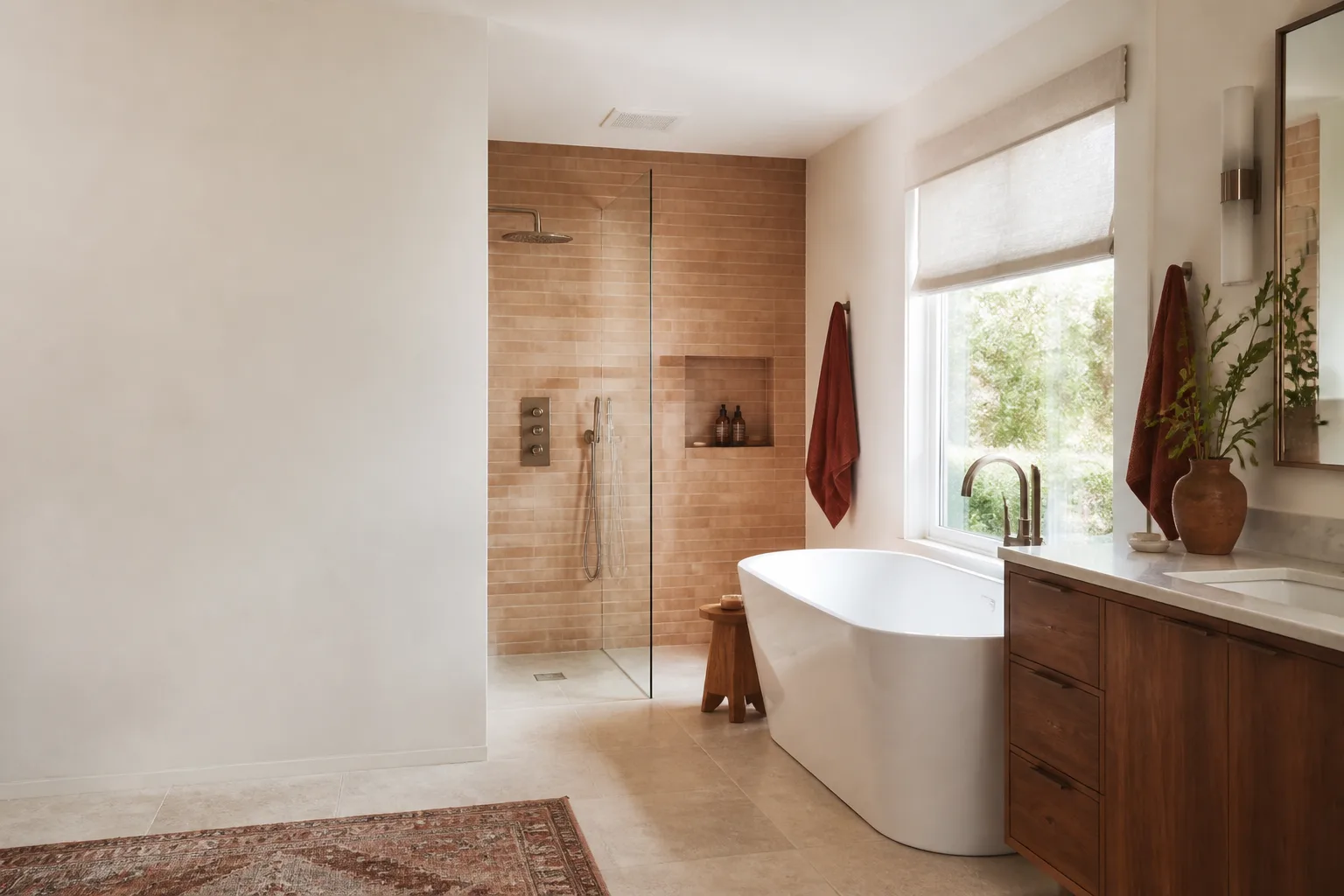
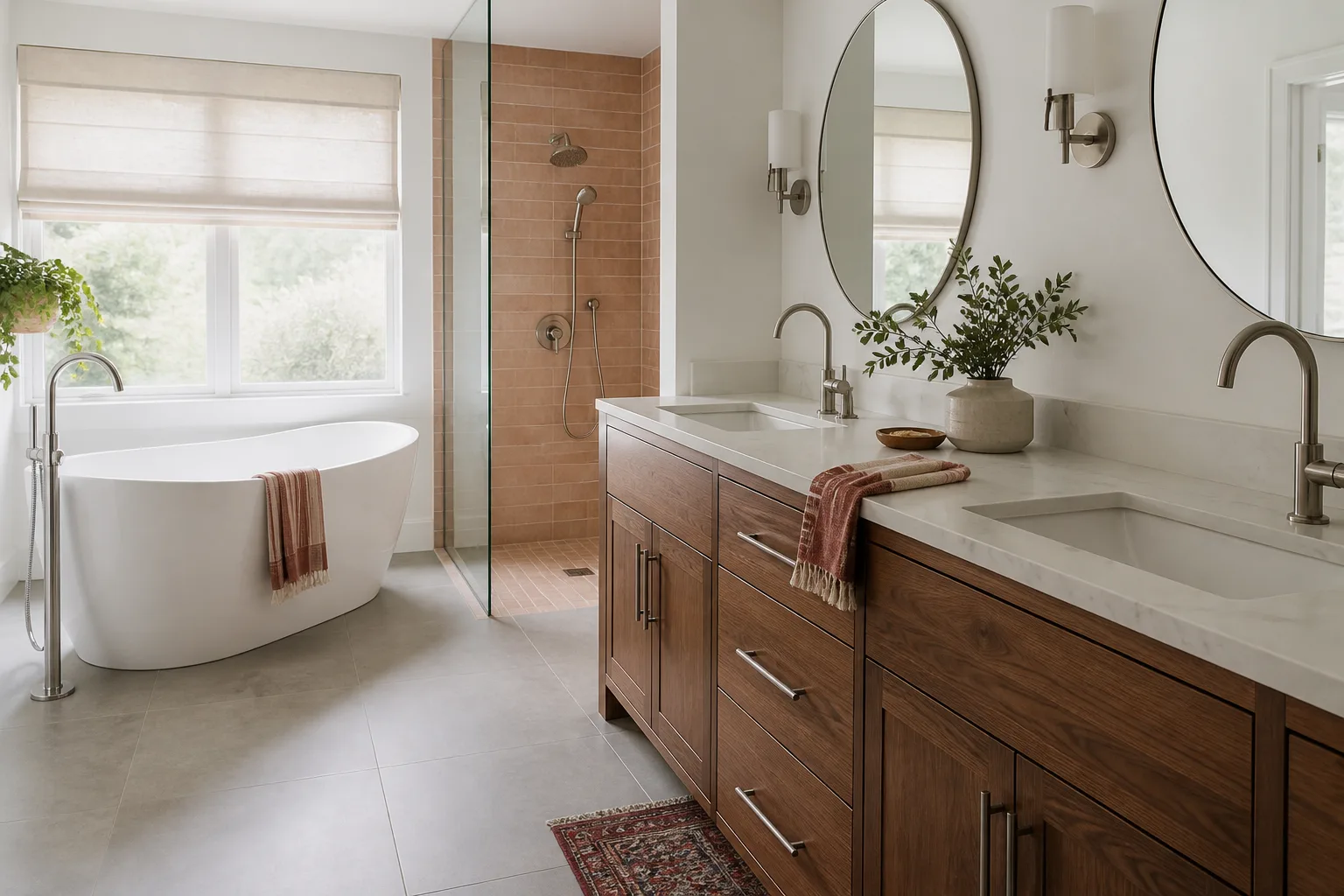
See the difference
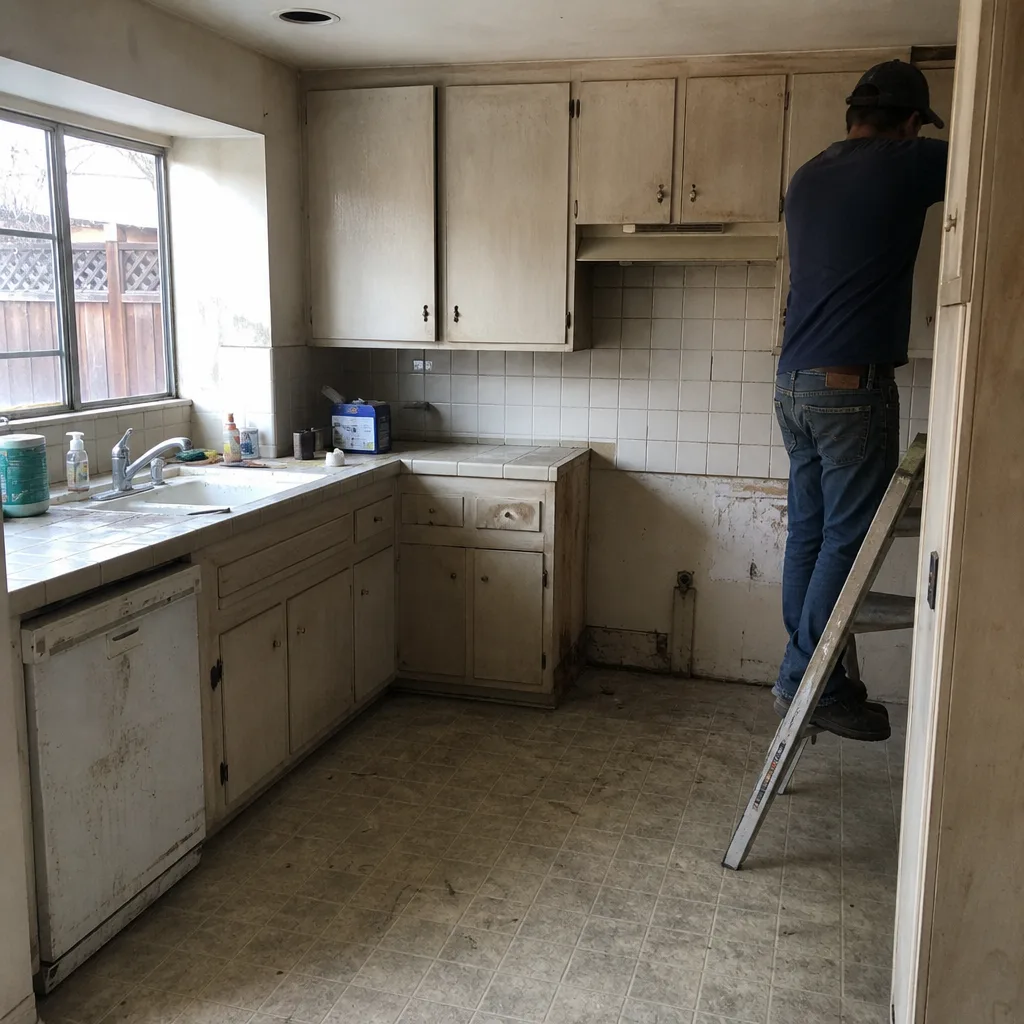 Before
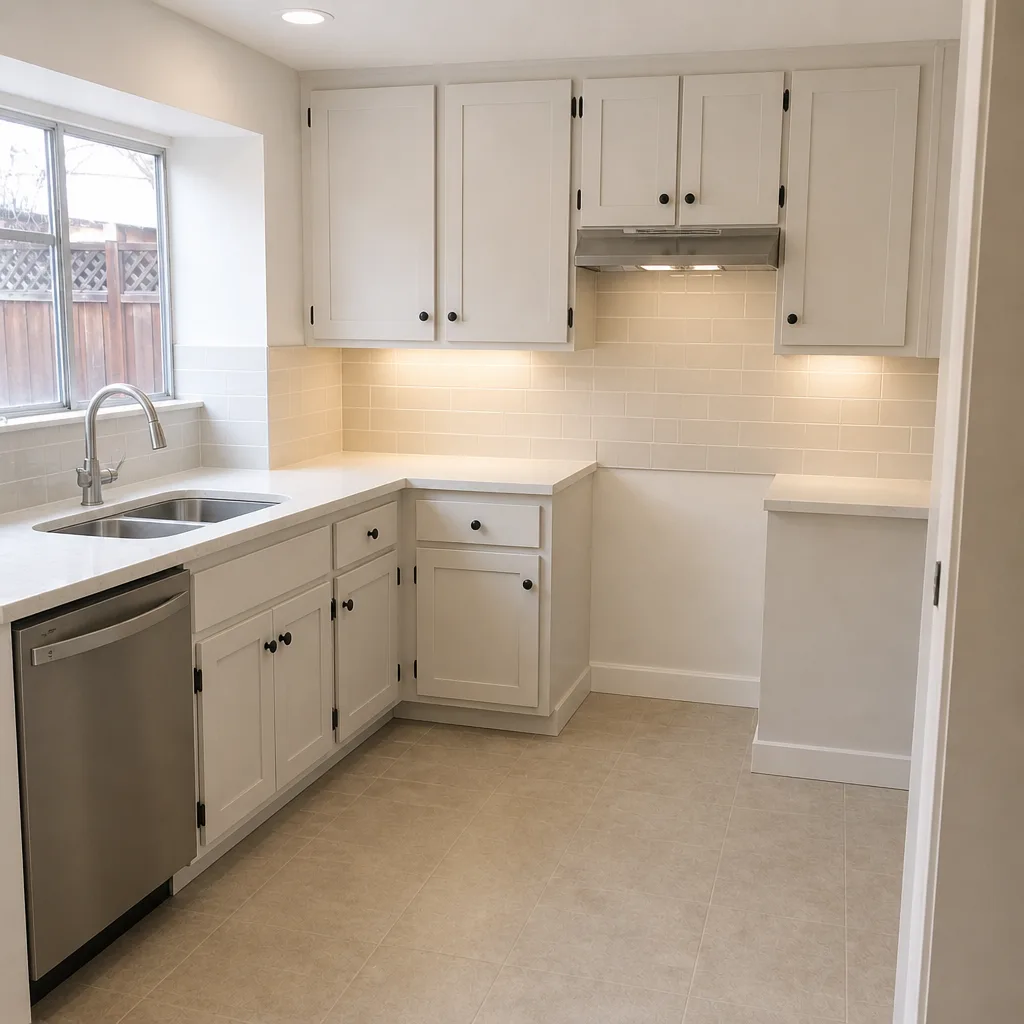 After
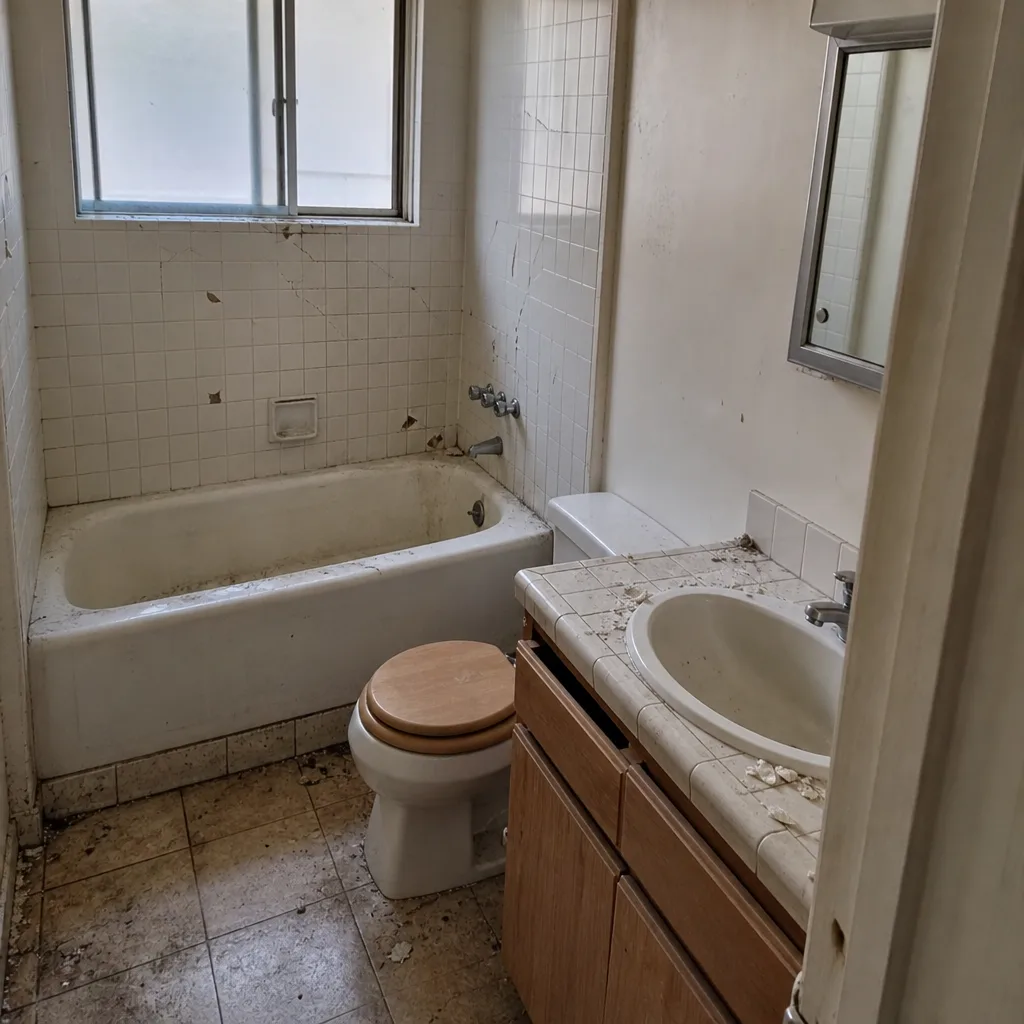 Before
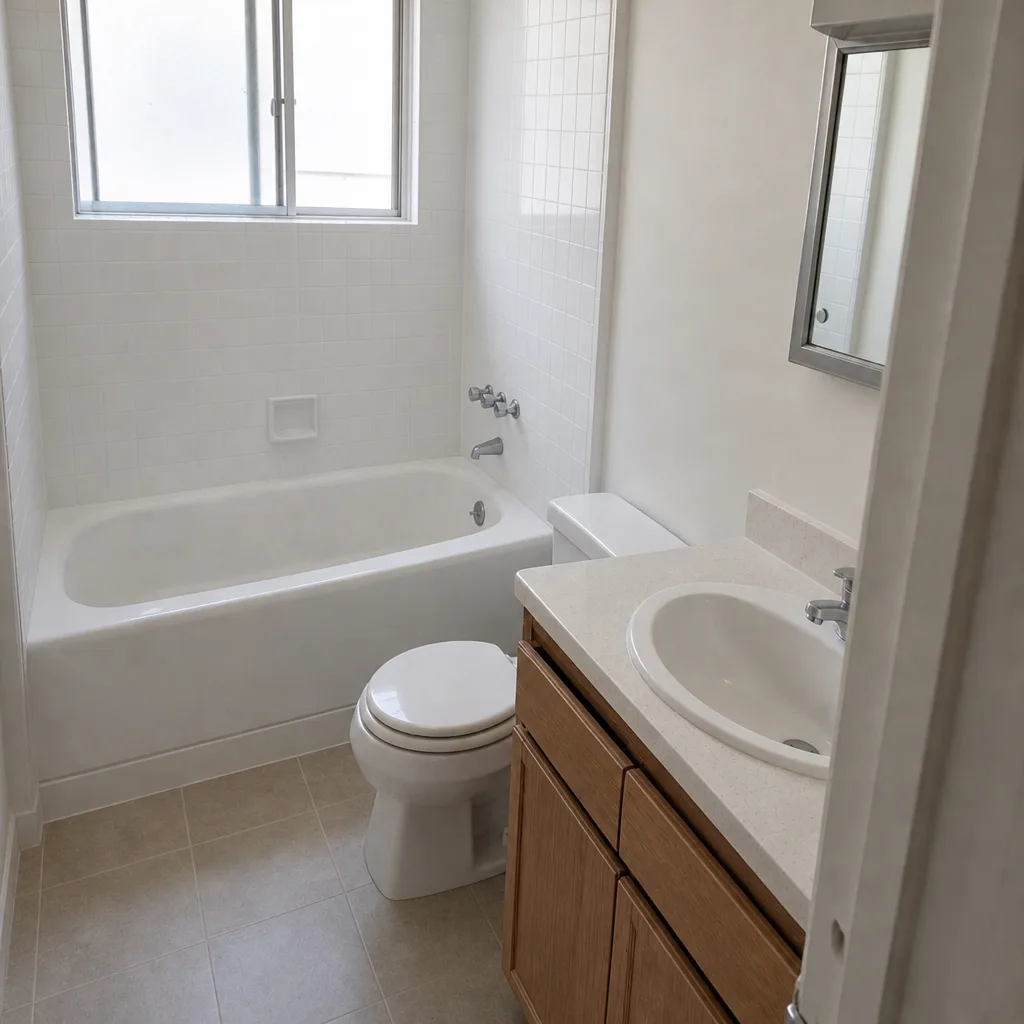 After
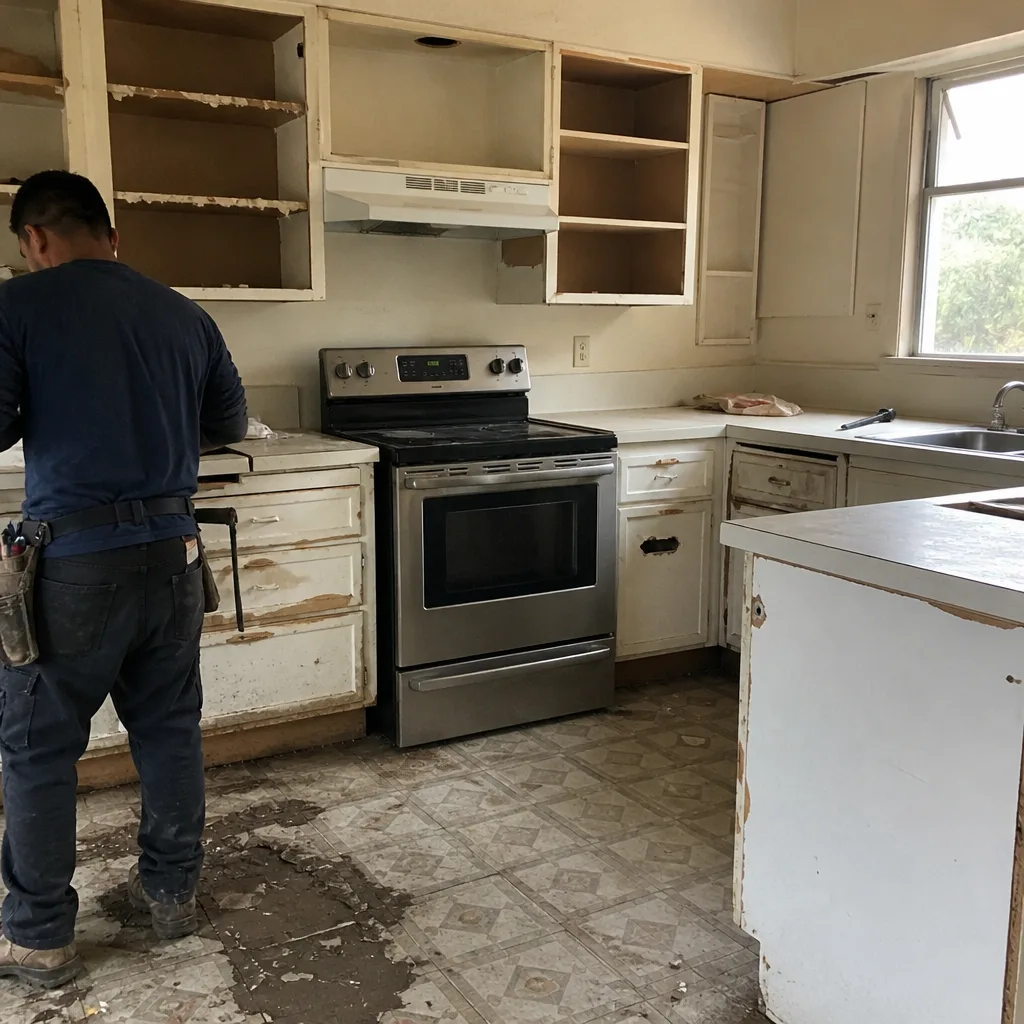 Before
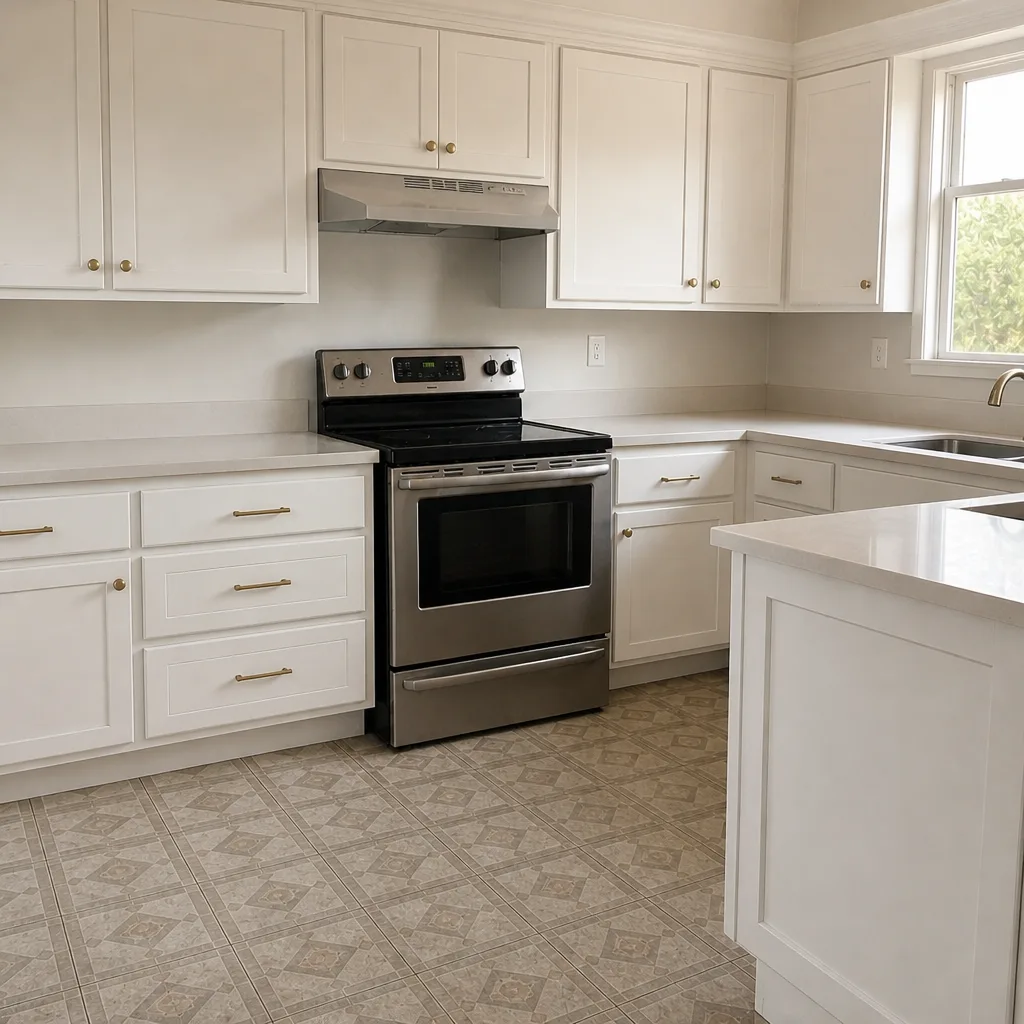 After
When to Call a Professional
Call a licensed contractor the moment your project touches the shower pan, the drain, the water supply, the exhaust fan, or any new electrical circuit. Those are the scope items where California code requires a licensed trade and a Sunnyvale inspection, and they’re also the items most likely to fail invisibly if done wrong. Call them too if you’re selling the home within a few years, if the bathroom is in a 1970s or earlier Sunnyvale house where the plumbing and framing can surprise you, or if you’re planning to be the owner-builder on a full gut where coordinating four trades and three inspections is more work than the tile. Our technicians have up to 22 years of experience, and they’ve walked every version of this project. Penhallow Remodeling Sunnyvale offers free estimates in Sunnyvale – call (888) 426-8719. A live person answers 24/7, and every estimate comes with the price in writing before any work starts.
Frequently Asked Questions
Yes, with limits. California’s owner-builder exemption lets you permit and perform work on your primary residence without a contractor’s license, but work that touches the drain, water supply, or electrical must be done by a licensed plumber or electrician. The exemption doesn’t cover rental properties or homes you’re flipping, and the work still needs to be permitted and inspected.
It’s legal to do it yourself on your primary residence, but we don’t recommend it. Waterproofing failures are hidden, cumulative, and expensive – a pinhole in a membrane leaks a few drops per shower while the framing behind it rots for a year before you see a stain. The membrane installation method is the product; using a Schluter system correctly requires the right thinset, the right overlap, and the right corner seals, and there’s no way to verify after the fact. Call (888) 426-8719 for a free estimate if you’d rather not gamble on that layer.
Painting, vanity mirror swaps that don’t move the electrical, toilet seat and lid replacement, finish hardware like towel bars and cabinet pulls, accessory installation, and caulk refresh on already-sealed joints. These are the finish layer, and they’re the ones that don’t touch water or a circuit. Leave anything involving the membrane, the drain, the valve, the exhaust fan, or new wiring to licensed trades.
For a full bathroom remodel, the inspection sequence covers rough plumbing and electrical before drywall closes, framing where walls move, the waterproofing in the wet areas before tile, and a final on the finished room. The inspector verifies scope and code compliance, not aesthetic quality. The record of those inspections is what insurance and buyers rely on later – that’s the real reason to pull the permit even when the work quality is high.
Unpermitted work that shows up in a disclosure can cost you in escrow, because the buyer’s inspector will pull the wet areas apart and the missing inspection record becomes a negotiation point. Permitted DIY work generally doesn’t hurt resale, because the permit and inspection trail is what matters – not who held the trowel. If you’re doing the wet-area work yourself, pull the permit and get the inspection.
A realistic hybrid project in Sunnyvale – licensed plumber, electrician, and waterproofing installer, homeowner doing paint, mirror, trim, hardware, and finish – saves the finish labor line, which typically runs $400-$900 in contractor time, plus any tile labor if the homeowner tiles over an inspected substrate. A full bathroom remodel in Sunnyvale runs $18,000-$42,000 depending on the wet-area scope; the hybrid path lands at the lower end of that range. Call (888) 426-8719 for a written price on your specific bathroom – the estimate is free and the number is fixed before work starts.
The Bottom Line
The DIY line in a bathroom isn’t drawn around skill. It’s drawn around what you can’t see after it’s built. Painting, a mirror swap, finish hardware, and accessories are genuinely yours to do, and doing them saves real money. The waterproofing, the drain, the valve, and the electrical are where a hidden failure becomes a catastrophic one, and where California code requires a licensed trade and a Sunnyvale inspection regardless of who owns the home. Structure the project in layers – licensed rough-in, licensed waterproofing, homeowner finish – and you keep the savings without keeping the risk. Pull the permit even when you do the work. The inspection record is the layer that protects you at resale and on a claim, long after the tile has been forgotten. If you want a written price on the licensed portion of your project, Penhallow Remodeling Sunnyvale is here – call (888) 426-8719 for a free estimate, and we’ll put the number in writing before anything starts.
Written by the team at Penhallow Remodeling Sunnyvale.