Last updated November 17, 2026

Free written scope consultation - allowances, timeline, and change-order rules on paper before a single trade is scheduled
The Complete General Contractor Guide for Sunnyvale Homeowners
The California Contractors State License Board received more than 20,000 complaints in a single recent year, and the most common trigger wasn’t bad workmanship. It was a price that changed after demo began. That detail matters in Sunnyvale, where a 1950s ranch in Cherry Chase and a newer townhome near downtown carry very different hidden conditions behind the drywall, and where a verbal estimate can quietly double once a permit gets pulled. This guide walks you through the whole process: which projects need a permit, what a written estimate must legally contain, how to read an insurance certificate, and the exact questions to ask three references before you sign anything.
Quick Answer
To hire a general contractor in Sunnyvale, verify their CSLB license, confirm they’ll pull permits in their own name, collect both general liability and workers’ comp certificates, and insist on a written fixed-price contract before work starts. The number on that contract should match the final invoice, and a written workmanship guarantee should come with it. Everything else in this guide is how you check that the person across your kitchen table can actually deliver on those four things.
Styles & brands we work with
- Kitchen remodeling
- Bathroom remodeling
- Home additions & ADU
- Roofing
- Windows & doors
- Driveway & pavers
- Fence
Table of Contents
- Which Sunnyvale Projects Need a Permit?
- What a Written Estimate Must Include
- How to Read a Contractor’s Insurance Certificate
- Fixed-Price vs. Time-and-Materials Contracts
- Three Reference Questions That Matter
- Sunnyvale Climate and What It Does to Materials
- Common Mistakes to Avoid
- When to Call a Professional
Which Sunnyvale Projects Need a Permit?
In Sunnyvale, the dividing line between a permit and a simple inspection usually comes down to whether you’re moving structural, mechanical, electrical, or plumbing systems. Cosmetic work does not trigger a permit. Anything that opens a wall and touches what’s inside almost always does.
Here’s how Sunnyvale’s Community Development Department generally draws the line:
- Usually needs a building permit: removing or moving a load-bearing wall, adding a room or bumping out a footprint, converting a garage, replacing a water heater in some configurations, new electrical circuits, rerouting plumbing, re-roofing with a change in material, and any window or door change that alters the rough opening size.
- Usually doesn’t need a building permit: interior paint, replacing cabinet doors and drawer fronts, swapping fixtures on existing connections, laying new flooring over a sound substrate, and repainting siding that isn’t being re-sheathed.
- Call the city before you assume: kitchen and bathroom remodels sit in a gray zone. Moving a range hood to a new wall is mechanical. Replacing a vanity in the same spot is not. When in doubt, one phone call to the permit desk saves a correction notice later.
Here’s the part most homeowners miss. Under California law, the permit must be pulled in the name of the licensed contractor doing the work, not in yours. If a contractor asks you to pull the permit as the “owner-builder,” that’s a signal. Owner-builder permits put the liability and the inspection record squarely on you, and they can complicate your homeowner’s insurance if something fails down the road. Ask any contractor you’re considering to show you a recent permit pulled in their own name. A legitimately operating firm will have one within a phone call.
What a Written Estimate Must Include
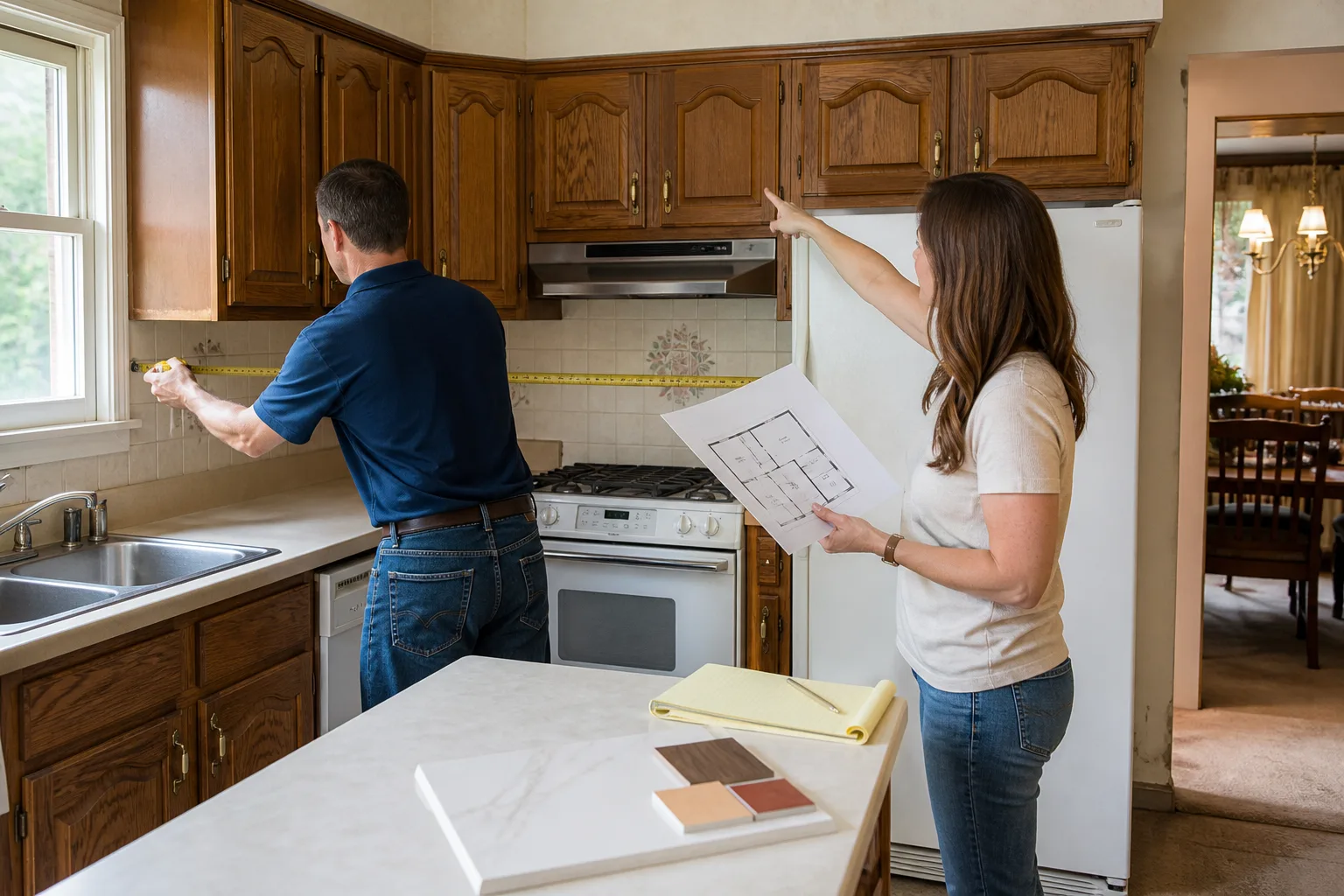
California’s Business and Professions Code requires a written contract for home improvement jobs over $500, and it spells out what that contract has to say. Most contractors still hand over a one-page number scrawled on a form. That’s not a contract, and it’s not protection.
A compliant written estimate for a Sunnyvale project should include:
- The contractor’s name, business address, and CSLB license number.
- A detailed description of the work, room by room, with materials named.
- The total price, and a clear statement of what’s included versus excluded.
- A payment schedule tied to completed milestones, not to a calendar.
- The approximate start date and completion date.
- The notice of the three-day right to cancel.
- A statement about who pulls the permit and who pays for it.
- Warranty and guarantee terms spelled out in writing.
In our experience looking at Sunnyvale bids, the line item homeowners most often see skipped is the permit fee. A contractor who doesn’t mention the permit hasn’t priced it, and that number shows up later as a change order. Ask every bidder to break the estimate into labor, materials, permit, and contingency so you can compare apples to apples. A visible line-item written price before work starts is the difference between a budget and a surprise. For a deeper look at how a project gets scoped before that number appears, see our general contractor services in Sunnyvale.
How to Read a Contractor’s Insurance Certificate
There are two documents here, and homeowners routinely see one and think they’ve seen both. General liability insurance covers damage to your property or injury to a third party. Workers’ compensation insurance covers the contractor’s employees if they’re hurt on your job. They are separate policies, sometimes from separate carriers, and you need proof of both.
When you ask for the certificate of insurance, check these four things:
- The insured name matches the contract. If you’re signing with “ABC Construction LLC” but the certificate says “ABC Construction Inc.,” that’s not the same entity.
- The policy is current. Look at the effective and expiration dates. An expired certificate is a piece of paper.
- The coverage type is listed. General liability and workers’ comp should each appear with a policy number.
- You can verify it. Call the carrier listed on the certificate directly and confirm the policy is active. It’s a five-minute call.
Why the workers’ comp piece matters so much: if an uninsured worker gets hurt in your Sunnyvale home, the liability can fall to you as the property owner. Asking for that certificate isn’t distrust. It’s the same standard every general contractor with a functioning business already holds their own subs to.
Fixed-Price vs. Time-and-Materials Contracts
Two contract structures dominate residential construction, and each protects you in a different scenario. Knowing which one you’re signing is the single biggest factor in whether your final cost matches your original bid.
A fixed-price contract locks the total cost for a defined scope. It protects you when the scope is well understood and the site is reasonably predictable. It protects the contractor when they’ve done their homework and priced the risk. When you sign a fixed-price agreement with a clearly stated scope, the only way the number changes is if you request work outside the scope.
A time-and-materials contract pays for hours worked plus materials, sometimes with a markup. It protects the homeowner when the scope is genuinely unknowable, like opening a wall in a 1958 Eichler-style home and discovering forty years of undocumented electrical work. It protects you with transparency, not with a ceiling.
Most Sunnyvale kitchen and bath remodels should be fixed-price with a written contingency allowance for hidden conditions. A contractor who insists on time-and-materials for a standard remodel is asking you to absorb risk they should be managing. The written guarantee should ride alongside either contract: a stated window for corrections, and exactly what happens if something fails inside that window.
Three Reference Questions That Matter
“Were you happy with the work?” gets you a polite yes from everyone. It tells you nothing about what happens when a project goes sideways, which is where a good contractor earns their reputation.
Ask these instead:
- “How many change orders were issued, and what was the final cost versus the original bid?” If the answer is “one change order, final cost was 4% over the bid, and we added two outlets we asked for,” you’re talking to someone who priced honestly. If it’s “we stopped counting,” you’re not.
- “Did the contractor show up inside the window they promised, and who called you when they were going to be late?” A punctuality pattern tells you whether the crew respects your schedule or treats the arrival window as a suggestion.
- “Did anything go wrong after the job, and how was it handled?” Every project has one thing that isn’t perfect. The interesting part is the response. A contractor who came back and fixed it tells you what a written guarantee is actually worth in practice.
Ask these three questions of three separate references, and you’ll know more than any online review will tell you.
Sunnyvale Climate and What It Does to Materials
Sunnyvale sits in a mild, dry-summer Mediterranean climate, and that shapes material choices in ways that don’t come up in wetter regions. Summer daytime swings of 30 to 40 degrees between afternoon heat and overnight cool are routine. That thermal cycling is hard on materials that expand and contract at different rates.
What we watch for on Sunnyvale jobs:
- Tile substrate. Cement board substrate (the moisture-resistant layer behind your tile) matters more here than in coastal climates because the interior humidity is low but summer heat drives movement. Skip the movement joint at the perimeter and you get cracked grout in two summers.
- Exterior siding. James Hardie fiber cement handles Sunnyvale’s UV load and the occasional atmospheric river far better than vinyl, which chalks and warps over the long run.
- Countertops. In a kitchen with west-facing windows, direct afternoon sun bakes a countertop. Engineered quartz like Cambria handles that without the fading that some older laminates showed. Natural stone requires more sealing in dry-summer climates.
- Roofing. Cool-roof materials in Title 24-compliant roof replacements matter more here because the summer attic heat load drives cooling costs, and Sunnyvale’s building department enforces the cool-roof requirement on covered projects.
None of that is a reason to over-spec. It’s a reason to pick materials for the climate you actually live in. If you’re planning a wet-room heavy project, our Sunnyvale bathroom remodeling page digs into waterproofing details specific to this area.
How Long Does a Typical Sunnyvale Remodel Take?
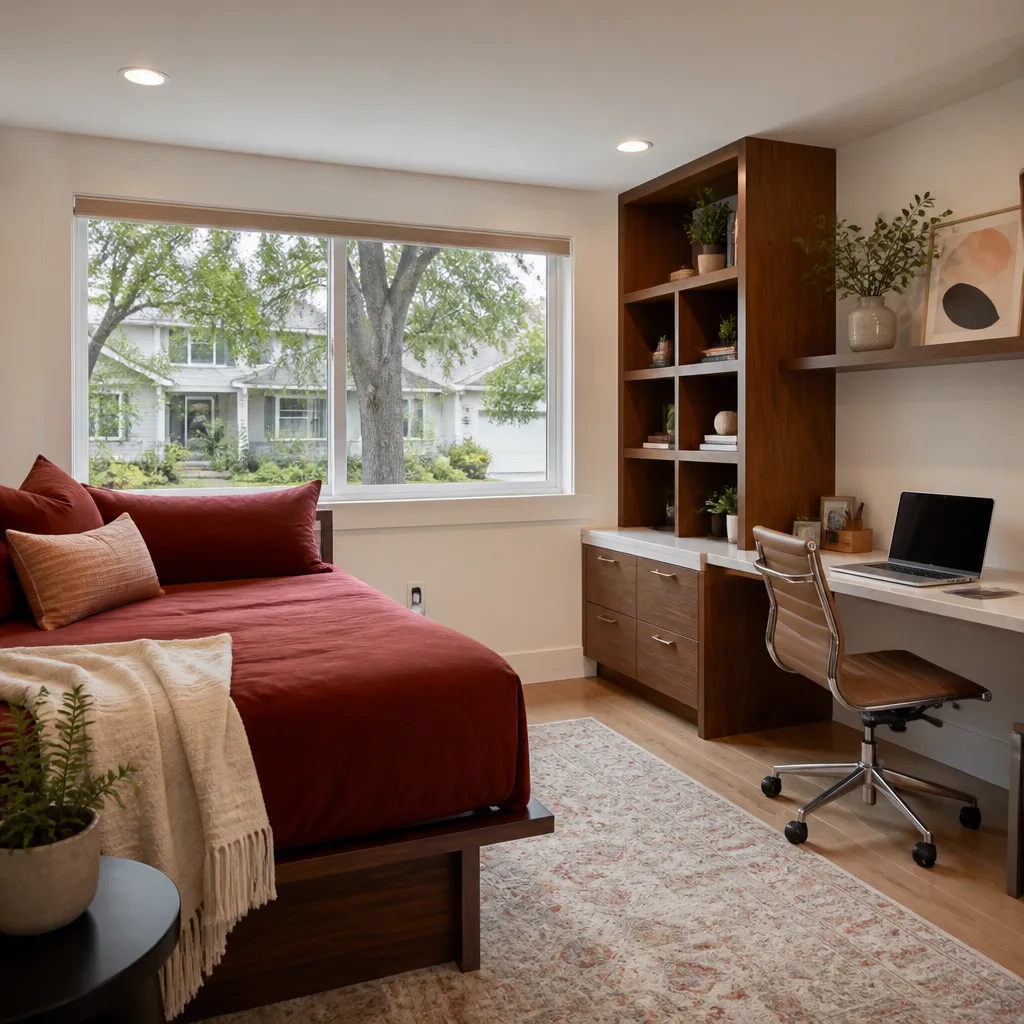
A standard Sunnyvale bathroom remodel runs four to eight weeks once the permit is issued. A full kitchen remodel runs eight to fourteen weeks. Whole-home remodels stretch past sixteen weeks depending on how many systems get touched.
The piece homeowners underestimate is the permit timeline. Sunnyvale’s plan review for a straightforward bathroom typically runs a few weeks, longer if structural elements are involved. A contractor who tells you the job will start “next Monday” without a permit in hand is telling you something about their process. Realistic timelines are: two to four weeks to permit a simple interior project, four to eight weeks for anything structural, then the construction window on top of that. Ask any bidder to give you the permit runway and the construction window as separate line items. The contractors who can do that have done this before.
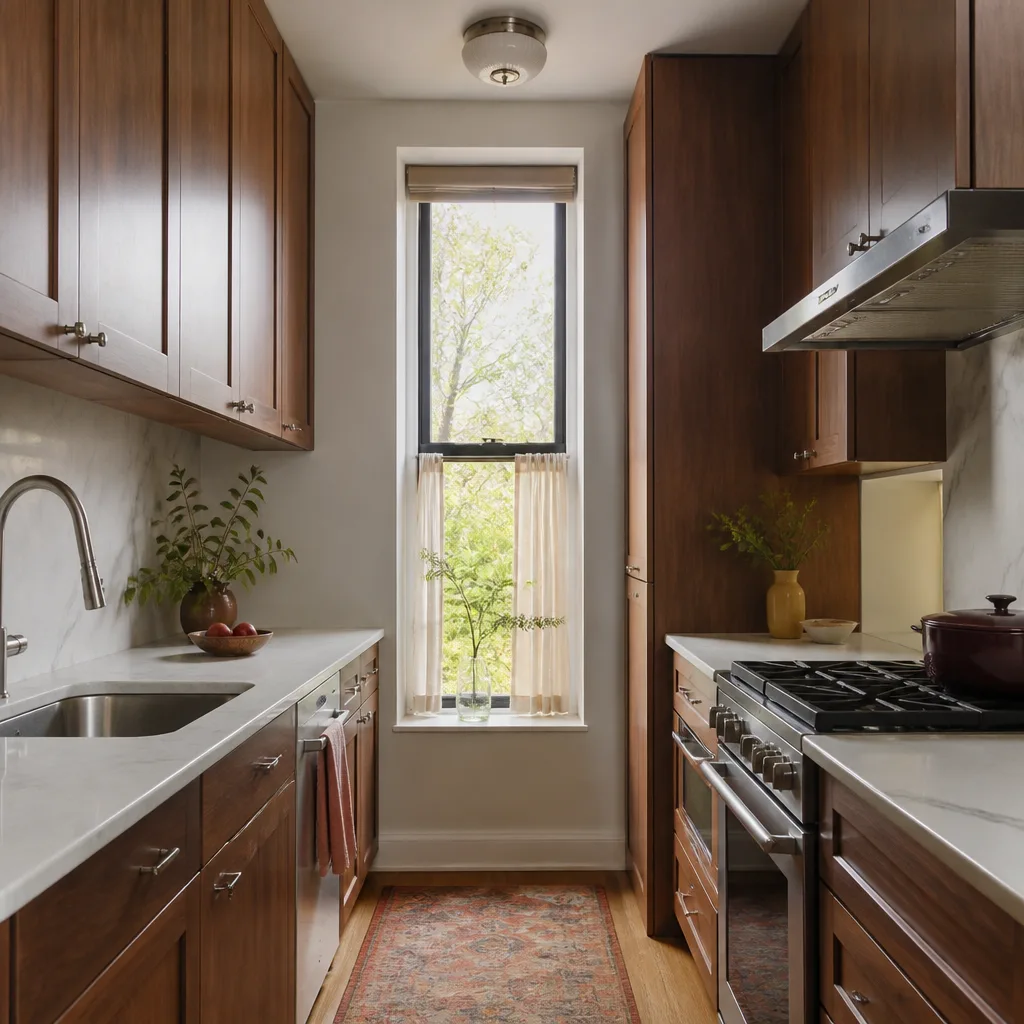
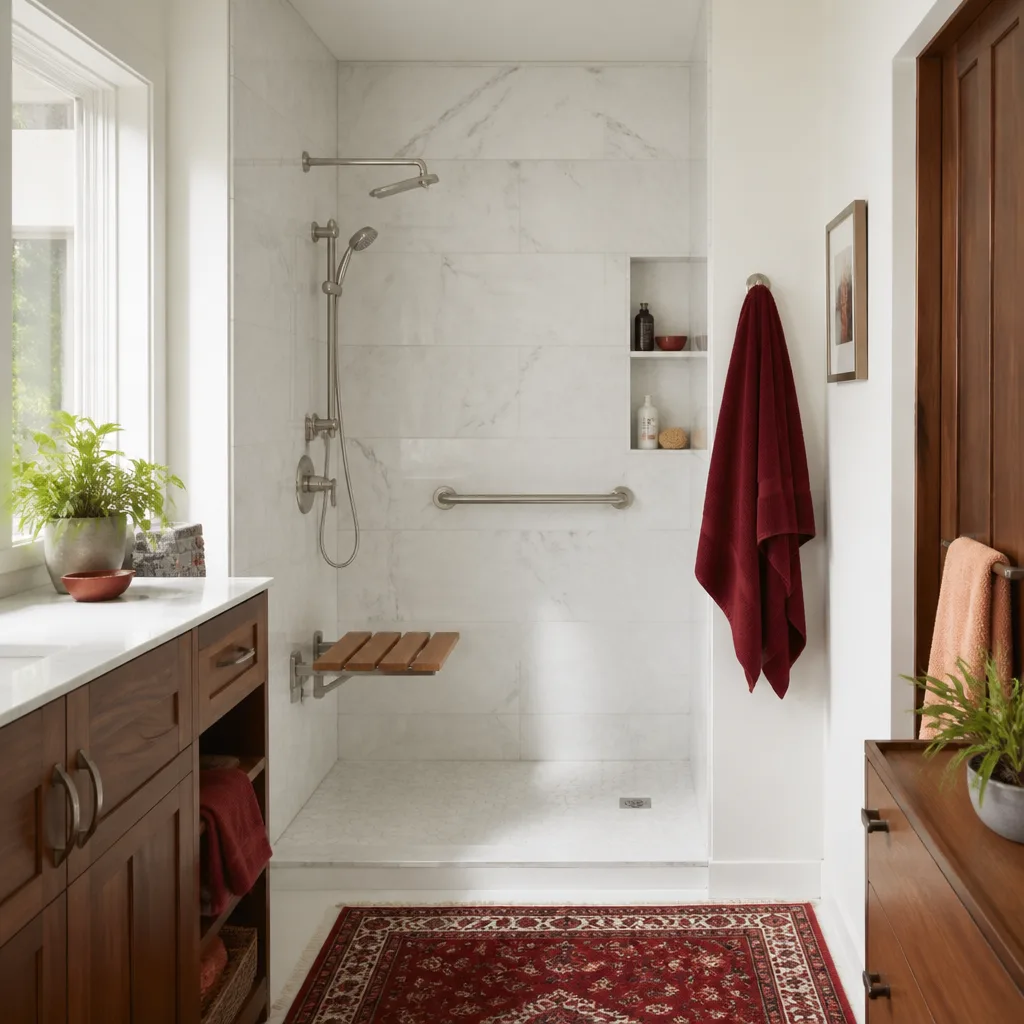
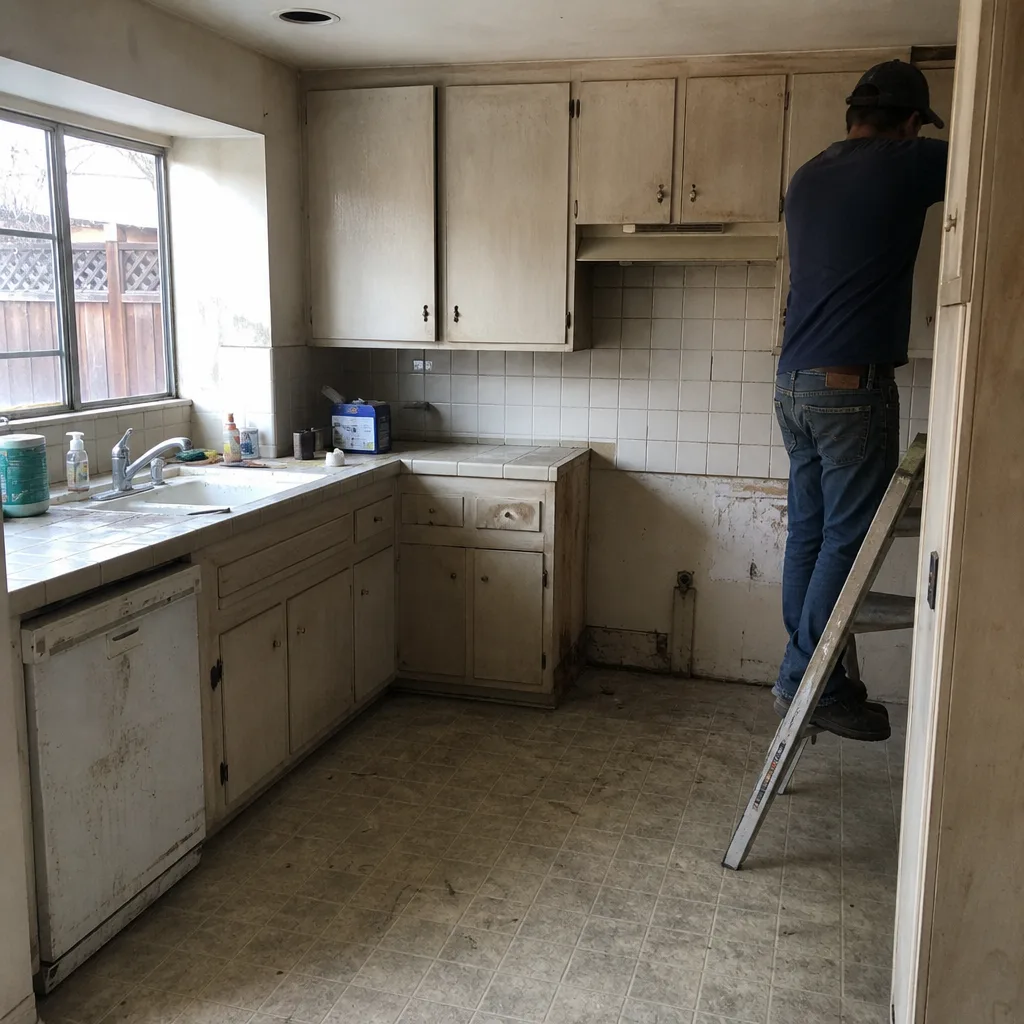
See the difference
 Before
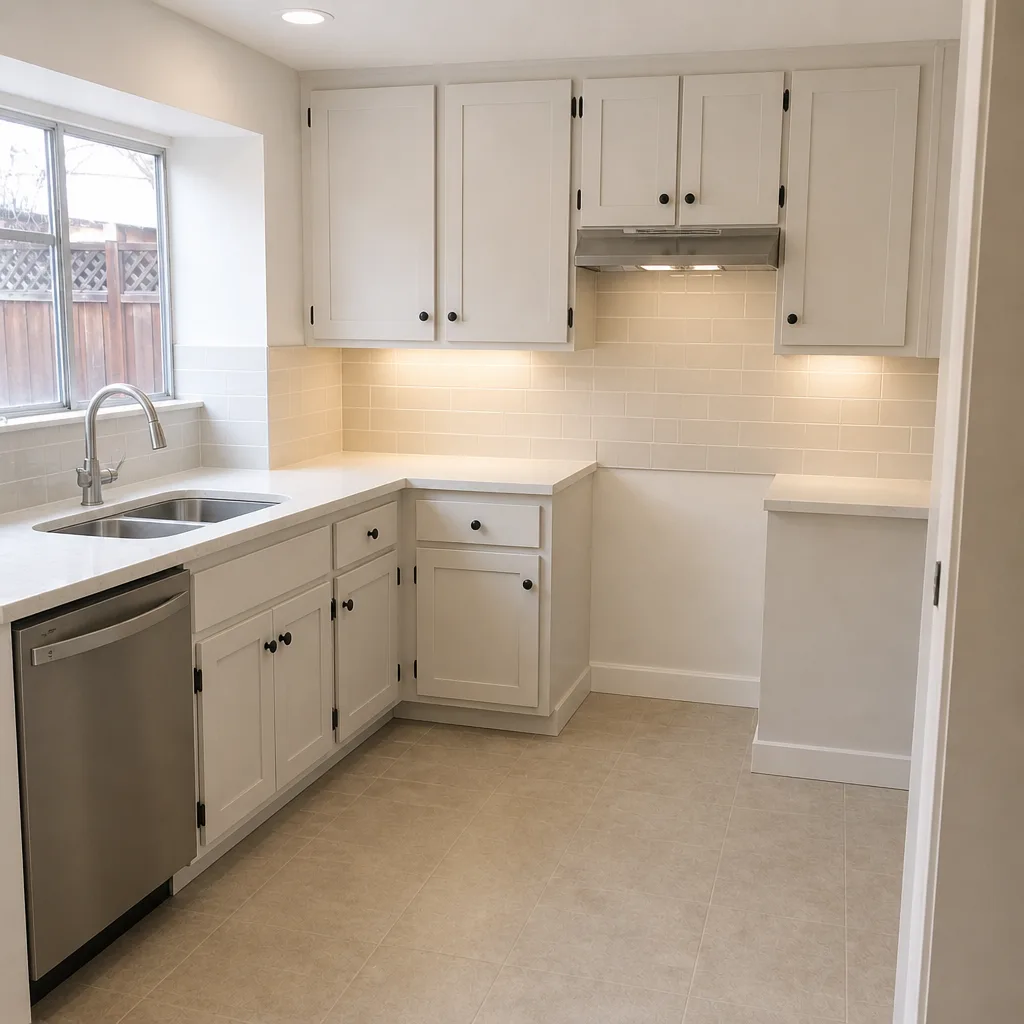 After
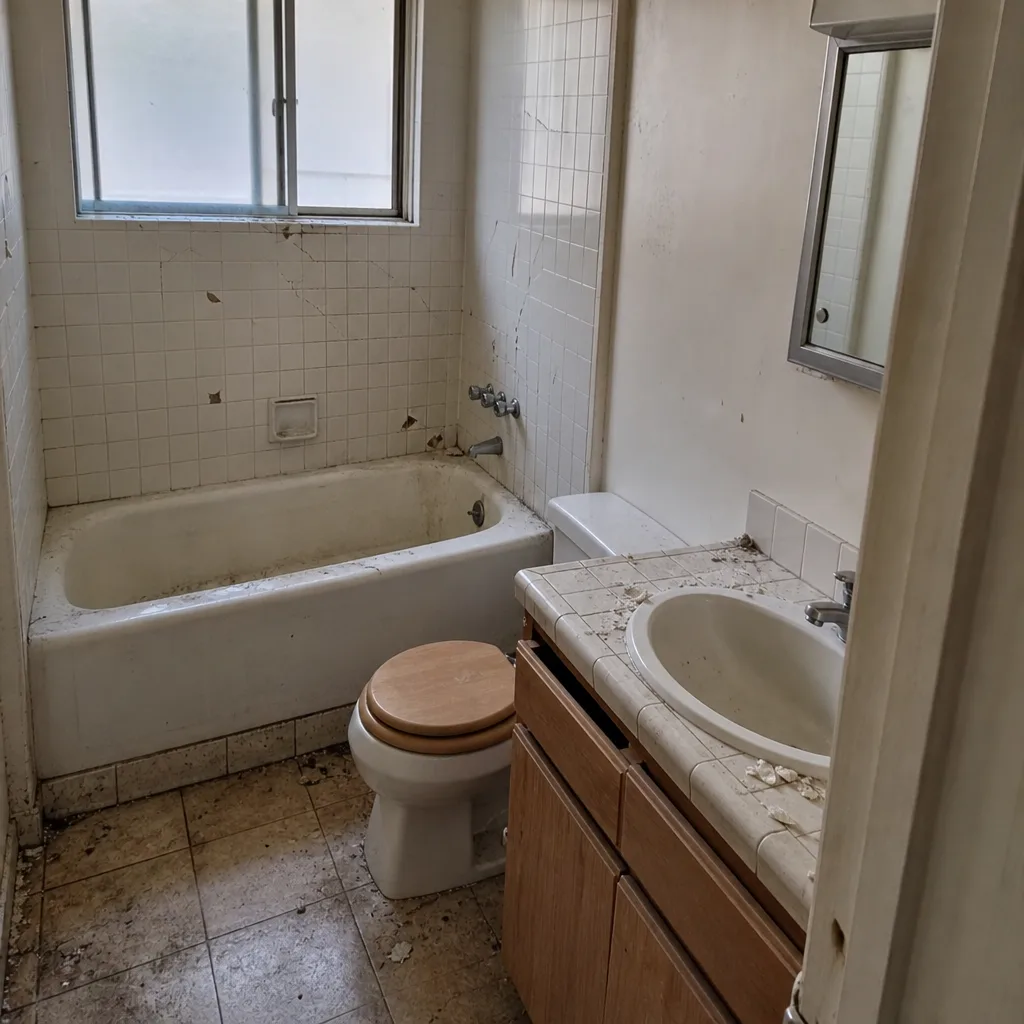 Before
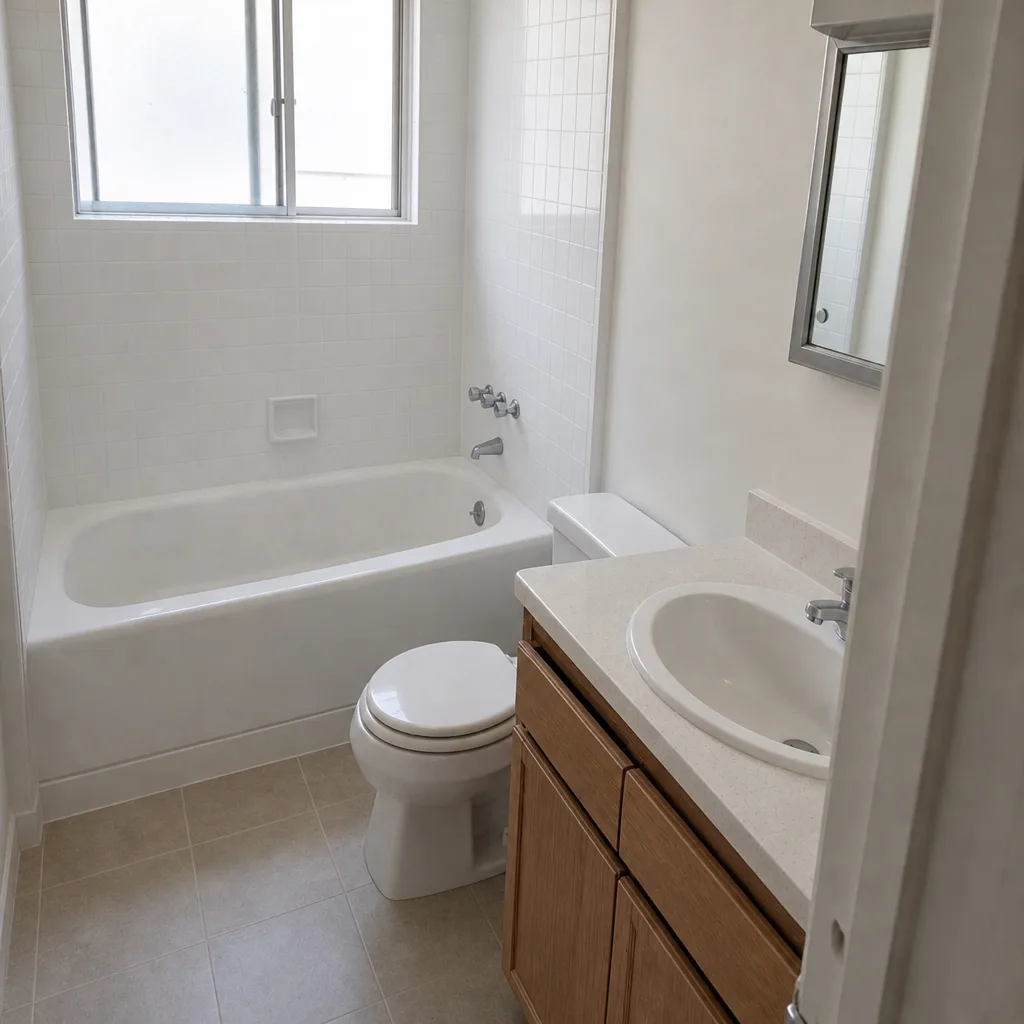 After
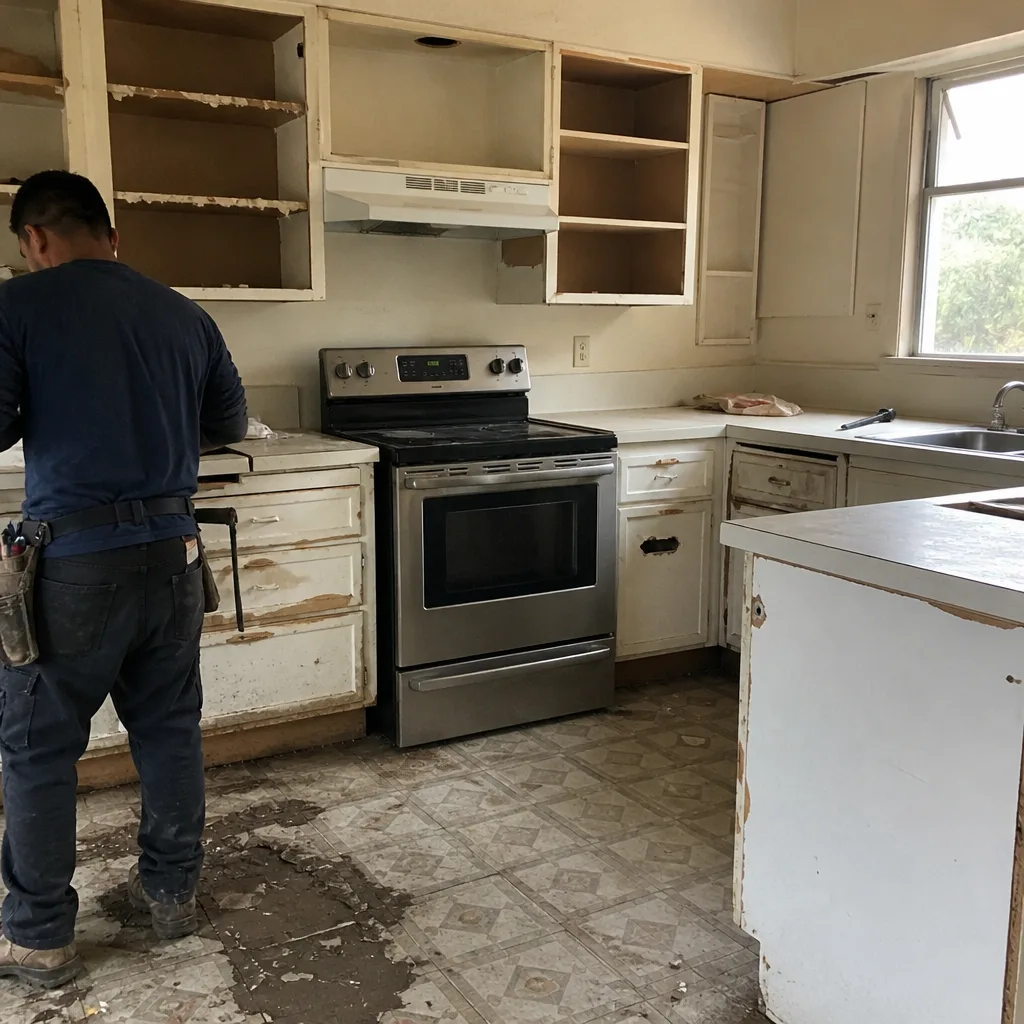 Before
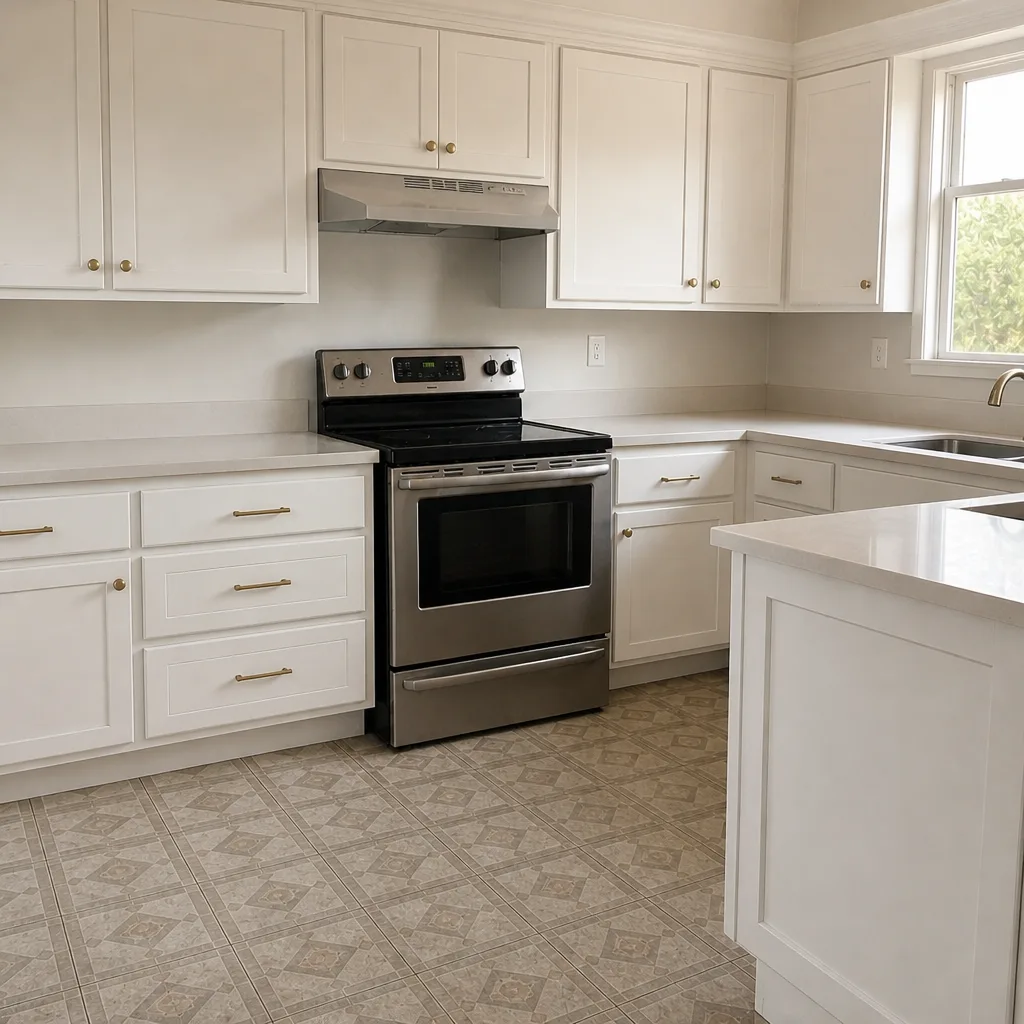 After
What Does a Kitchen or Bath Remodel Cost in Sunnyvale?
Sunnyvale pricing sits above the national average because Bay Area labor costs and permitting fees push it there. A bathroom remodel typically runs $18,000 to $42,000 depending on size, tile level, and whether the plumbing layout moves. A kitchen remodel typically runs $40,000 to $95,000 depending on cabinet line, countertop material, and whether walls come down. A whole-home remodel typically runs $120,000 to $300,000 depending on square footage and how many systems get touched.
What drives the number up or down:
| Line item | Typical Sunnyvale range | What moves it |
|---|---|---|
| Bathroom remodel | $18,000 – $42,000 | Plumbing relocation, tile selection, whether the layout changes |
| Kitchen remodel | $40,000 – $95,000 | Cabinet line (stock vs. semi-custom), countertop material, appliance package |
| Whole-home remodel | $120,000 – $300,000 | Square footage, number of systems touched, structural work |
| Permit fees | $500 – $3,500 | Project scope, valuation-based fee schedule |
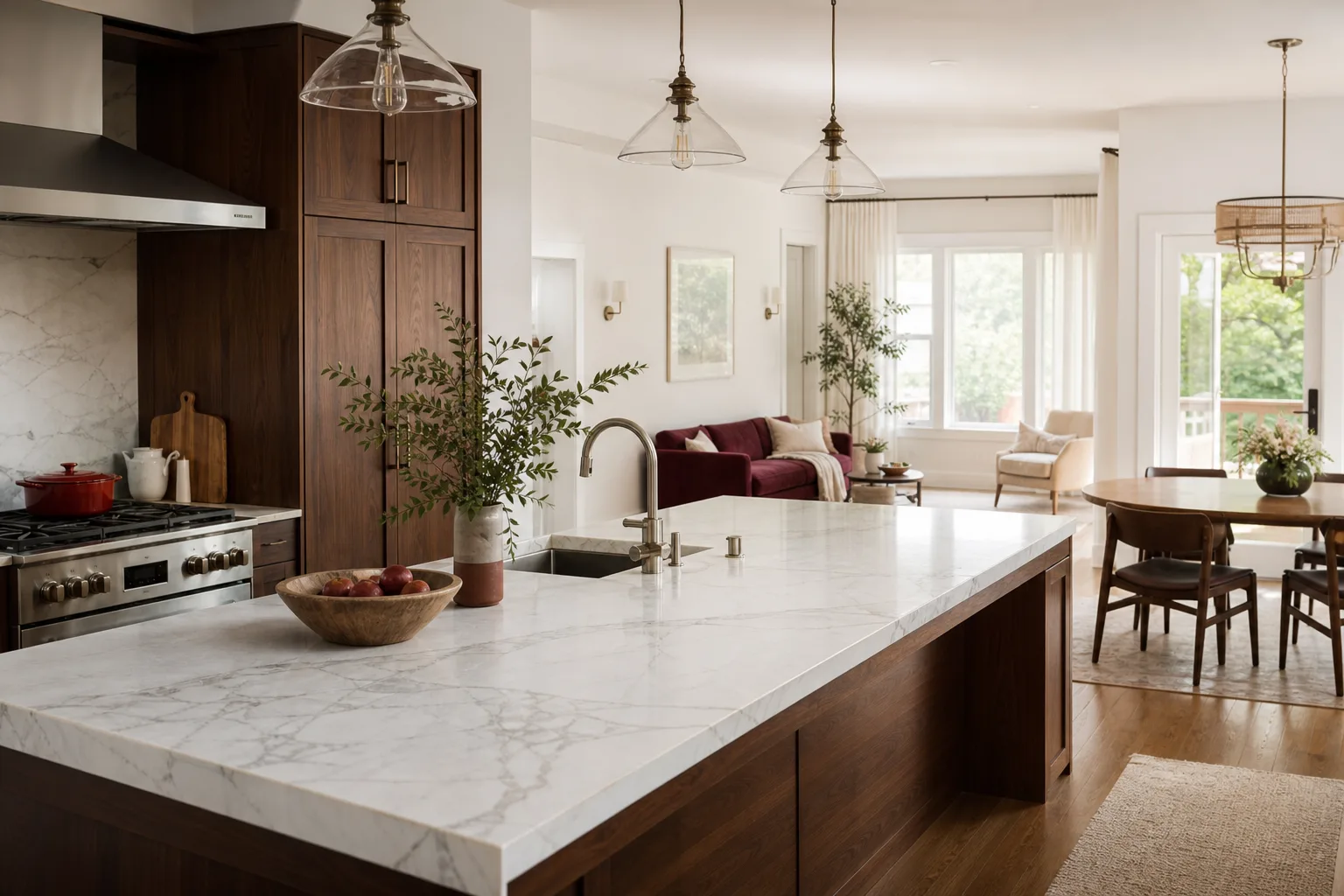
The single biggest swing is whether walls move. Cabinet line is the second. A stock cabinet from a mid-grade source and a semi-custom KraftMaid line can differ by $8,000 or more on the same kitchen. Countertop choice matters too: Silestone and Caesarstone engineered quartz typically price below Cambria, though all three beat natural stone on maintenance. Get a written line-item quote before any product is ordered.
Common Mistakes to Avoid
- Accepting a verbal estimate. A verbal number is a wish. Protect yourself by insisting on a written price before any work starts, with a defined scope document behind it.
- Letting the contractor pull the permit in your name. In Sunnyvale, an owner-builder permit puts the inspection record on you, and that’s a record you don’t want your name attached to years later.
- Not checking the insurance certificates. General liability and workers’ comp are two documents. Homeowners who skip the second one assume a risk they didn’t know they were carrying.
- Choosing the lowest bid without comparing scopes. A bid $12,000 below the others often means something was left out of the contract. Compare line items, not totals.
- Skipping the reference questions about change orders. The single best predictor of a final cost near the original bid is whether the contractor handles the hidden-condition conversation cleanly.
- Ignoring the arrival-window promise. A contractor who can’t commit to a window before the job will have the same problem during the job. Ask for the window in writing.
- Paying a large deposit up front. California law restricts deposits on home improvement contracts to $1,000 or 10% of the total, whichever is less, except for special-order materials. A contractor asking for 50% up is asking you to finance their cash flow.
When to Call a Professional
Some projects look like a weekend job and then don’t. A toilet that keeps rocking after you’ve tightened the bolts suggests flange damage underneath. A wall that’s warm to the touch near an outlet means calling an electrician before a general contractor. Cracked grout that regrows in the same line every few months means a substrate or movement issue, not a caulk problem. Water staining on a ceiling after a single heavy rain means the roof or a flashing joint needs eyes on it. And any project that involves moving a load-bearing wall, pulling a permit, or touching more than one system belongs to someone carrying the license and insurance to do it. A good general contractor will tell you when a project doesn’t need one.
Penhallow Remodeling Sunnyvale offers free estimates in Sunnyvale. Call (888) 426-8719 to schedule one, with a written number and a written guarantee before any work starts.
Frequently Asked Questions
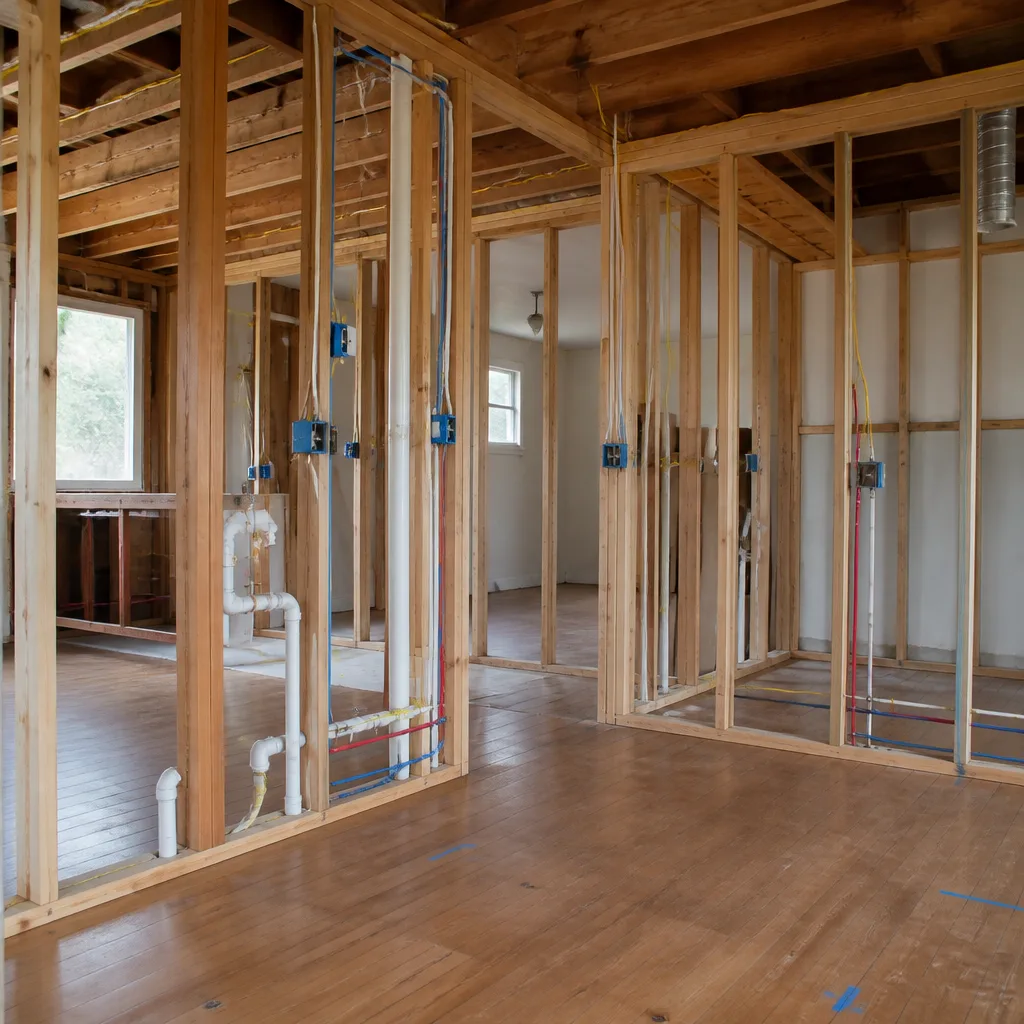
Usually yes. Any kitchen remodel that moves electrical circuits, plumbing lines, or a gas connection triggers a permit, and most full kitchen remodels touch at least one of those. Cosmetic-only changes like new cabinet doors or fresh paint typically don’t. When in doubt, call the Sunnyvale permit desk before scheduling the work.
Go to the California Contractors State License Board website, enter the license number the contractor provided, and confirm the license is active and the business name matches your contract. The CSLB also shows any disciplinary history. It takes five minutes and it’s the single most valuable five minutes of the hiring process.
General liability covers damage to your property or injury to a third party during the job. Workers’ comp covers the contractor’s own employees if they’re injured on your project. You need to see both certificates, from separate policies, verified directly with the carrier listed on each.
They shouldn’t, and a contractor who proposes it is signaling something. Under California law, the permit should be pulled in the name of the licensed contractor doing the work. Owner-builder permits are reserved for homeowners doing their own work, and they shift the liability and inspection record to you.
Sign a fixed-price contract with a written scope document and a defined contingency allowance for hidden conditions. The two things that most often turn a bid into a higher invoice are unspecified scope and change orders from discovered problems. Ask any contractor to explain in writing how they handle the hidden-condition conversation before work starts, and get that documented.
That depends entirely on the written guarantee. Ask any contractor to show you the guarantee in writing before you sign, with a specific window for corrections and an explicit statement of what happens if the work fails inside that window. At Penhallow, every project comes with the 365-Day Done Right Promise: if the work fails inside that window, we come back and fix it at no charge, and that promise is written into the contract. Call (888) 426-8719 for a free estimate and a look at the guarantee before you hire anyone.
The Bottom Line
Hiring a general contractor in Sunnyvale comes down to four documents and three phone calls. Verify the license on the CSLB site. Collect both insurance certificates and confirm them with the carrier. Insist on a written fixed-price contract with a defined scope and a stated guarantee. Then call three references and ask about change orders, arrival windows, and what happened after the job. A contractor who can’t produce any one of those things before work starts won’t be producing it after. The number on day one should be the number on the invoice, and the guarantee should be a real document, not a sentence in a sales pitch.
If you’re ready to see what a written price and a written guarantee look like on your project, our Sunnyvale kitchen remodeling and bathroom pages walk through how a scope gets built. You can also start from our Penhallow Remodeling Sunnyvale home page.
Contact
Call (888) 426-8719 for a free estimate on your Sunnyvale project. We answer the phone with a real person, we put the price in writing before any work starts, and we back every project with the 365-Day Done Right Promise. Free second visit if the repair fails, no service call, no re-inspection fee. Schedule your estimate today and see the number before you commit.
Written by the team at Penhallow Remodeling Sunnyvale.