Last updated November 17, 2026






Free written scope consultation - allowances, timeline, and change-order rules on paper before a single trade is scheduled
Bathroom Remodeling Warning Signs Every Homeowner Should Know
A contractor who gives you a verbal estimate and says “we’ll figure out the final number once we open the walls” has already told you everything you need to know, and none of it is good. That single sentence is a pre-contract warning sign, and it predicts more about how your bathroom project will end than any photo on a review site. The red flags that sink a remodel rarely appear in the finished tile work. They show up in the conversation before the first tool is touched, specifically in how a contractor handles the price and the promise. This guide teaches you to read contractor behavior, not just contractor reviews. You’ll learn what separates an honest written estimate from a vague one, how the “substrate excuse” gets misused, why Sunnyvale permit requirements matter, and the three questions that separate careful contractors from ones who rely on confusion.
Quick Answer
The biggest bathroom remodeling warning signs are verbal-only pricing, no written guarantee, a contractor who can’t or won’t offer a license number, and vague allowances that are designed to grow. In-progress signs include no daily cleanup and arrival windows that slip without notice. If a bidder won’t put the price and the warranty in writing before work starts, treat that as the answer to your question and walk away.
Styles & brands we work with
- Kitchen remodeling
- Bathroom remodeling
- Home additions & ADU
- Roofing
- Windows & doors
- Driveway & pavers
- Fence
Table of Contents
- Pre-Contract Warning Signs: What a Bidder Reveals Before You Sign
- What a Legitimate Written Estimate Must Actually Contain
- The “Substrate Excuse”: When Surprise Damage Is Real and When It’s a Pattern
- Sunnyvale Permits and Why Skipping One Is the Biggest Warning Sign of All
- In-Progress Warning Signs: Cleanup, Arrival Windows and Communication
- Three Questions to Ask Before Signing Anything
- Reading Contractor Behavior, Not Just Reviews
Pre-Contract Warning Signs: What a Bidder Reveals Before You Sign
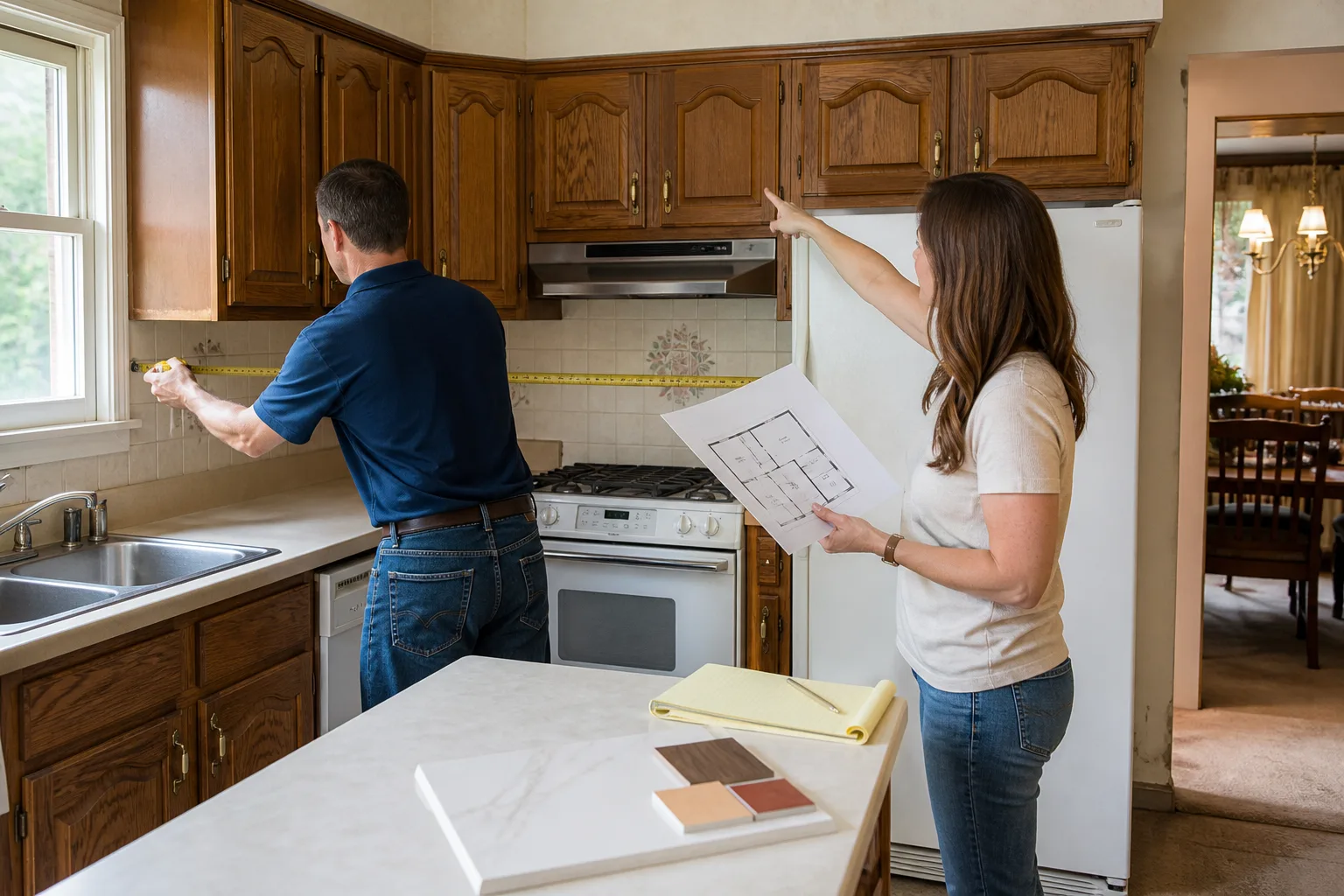
The conversation you have during the bidding stage is a live audition. Pay attention to it. A contractor who is relaxed about the details when nothing is at stake will be just as relaxed when the details cost you money. In our experience across Sunnyvale, the contractors who eventually generate complaints show the same handful of tells during the walk-through, long before a contract exists.
Here’s what to watch for during those first conversations:
- Verbal-only pricing. “Ballpark is around thirty grand, give or take.” A number spoken out loud and never written down can’t be held to anything. When the invoice arrives higher, there’s no document to compare against.
- No written guarantee offered. Ask directly what happens if a tile joint cracks or a fixture fails in the first year. If the answer is a shrug and “we stand behind our work,” that’s not a guarantee. A guarantee is a written promise with a duration and a remedy.
- No license number offered or volunteered. A legitimate contractor gives it without being asked. If you have to pry it loose, or the number doesn’t check out, stop there.
- Pressure to sign at the kitchen table. Real contractors expect you to compare bids. Anyone who says the price is “only good today” is selling, not building.
- Evasion about who will physically do the work. Who’s on site, who’s tiling, who’s running the plumbing. Vague answers about crews often mean the work is subbed out to people you’ve never met.
A contractor who puts the price in writing, states an arrival window, and hands you a written guarantee before work begins has told you, in words and in paper, exactly what kind of project you’re getting into. That’s the Penhallow standard under The Kingswell Way: say the price before the work, show up in the window we gave, leave the place cleaner than we found it. When you’re weighing bathroom remodeling in Sunnyvale, hold every bidder to that same bar.
What a Legitimate Written Estimate Must Actually Contain
A written estimate is not a single number on letterhead. The number alone tells you almost nothing. What matters is whether the document underneath it defines the job in enough detail that both of you know what the final invoice should look like. A vague estimate is often vager deliberately, because ambiguity protects the contractor at your expense.
Here’s what a credible written estimate should include, line by line:
- Line items for every major phase. Demolition, rough plumbing, electrical, waterproofing, tile, cabinetry, counters, fixtures, and labor should each appear as their own line. A single lump sum hides where the cost lives.
- Defined allowances. If the estimate says “tile allowance: $X per square foot,” that cap is explicit. An allowance with no number is a license to upsell you later.
- Listed exclusions. What’s not included matters as much as what is. Moving a drain, replacing a vent, dealing with hidden rot: good estimates say up front whether those are covered or whether they’d be change orders.
- A stated change-order process. How does a surprise get priced, and who signs off before the work continues? The answer should be in writing.
- Material and brand specifications. Which cabinet line, which countertop material, which fixture brands. When we specify Cambria quartz or a KraftMaid cabinet, the guarantee and the material warranty line up behind a known product.
- A payment schedule tied to milestones. Large deposits before any work begins are a red flag. Payments should follow completed phases.
- The guarantee, in writing. What it covers and how long it lasts. Ours is the 365-Day Done Right Promise: if it fails inside that window, we come back and make it right at no charge.
If you hold two estimates side by side and one is a paragraph while the other runs three pages of specifics, you’ve learned something important about how each contractor treats the relationship. The shorter one isn’t a bargain. It’s a blank check.
The “Substrate Excuse”: When Surprise Damage Is Real and When It’s a Pattern
Bathrooms hide their problems better than any room in the house. When the old tile comes off, what’s underneath can be genuinely ugly: water-stained drywall, soft framing, a subfloor that’s spongy underfoot. Real contractors find real damage all the time, and it costs real money to fix. The question isn’t whether surprises happen. It’s whether a given contractor treats surprises honestly or uses them as a lever.
Here’s the distinction that matters. The “substrate” is the layer behind your tile: cement board or a waterproof membrane that carries the tile and keeps moisture out of the structure. When tile fails early, the substrate is often the reason. A contractor who knows what they’re doing will tell you during the bid how they handle waterproofing, because that’s where bathrooms live or die.
A legitimate surprise looks like this: the contractor stops work, shows you photos of what they found, explains the fix in plain terms, prices it as a written change order, and waits for your approval before continuing. The cost is specific and tied to what’s actually there.
A bait-and-switch pattern looks different:
- The bid was suspiciously low and lost no time getting there.
- The surprise arrives almost immediately after demo, always in the same direction: up.
- No photos, no measurements, just “it’s worse than we thought.”
- The increase can’t be itemized, only summed.
- It happens on every project that contractor runs.
In Sunnyvale, the combination of older housing stock and a climate that swings between wet winters and dry summers does produce genuine moisture problems in bathrooms that haven’t been touched in decades. So the damage is real often enough that a dishonest contractor can hide behind it. That’s exactly why the written change-order process separates the two. One contractor hands you a photo and a number. The other hands you a feeling and a bill.
Sunnyvale Permits and Why Skipping One Is the Biggest Warning Sign of All
Of all the warning signs, a contractor who skips the permit is the one most likely to cost you money long after the crew leaves. Sunnyvale, like the rest of Santa Clara County, requires permits for work that touches structure, plumbing, electrical, or mechanical systems. A full bathroom remodel almost always crosses those lines. Moving a drain, changing a vent fan, adding a circuit for a heated floor: each one needs a permit and an inspection.
Why this matters so much:
- Unpermitted work surfaces at resale. Sunnyvale buyers and their inspectors look for permit records. A bathroom that can’t show one becomes a negotiating problem, and sometimes a tear-out.
- Insurance claims can be denied. If a leak from unpermitted plumbing damages the floor below, your insurer may decline the claim because the work was never inspected.
- You inherit the liability. The contractor is gone. The unpermitted work stays with the house, and with you.
- It signals everything else. A contractor who skips permits to save time or money is also cutting corners on the things you can’t inspect: waterproofing, fasteners, framing. The permit is a proxy for the whole approach.
Ask any bidder directly: “Will you pull the permits, and will the inspections pass?” The answer should be an unqualified yes, followed by a clear explanation of who schedules the inspections. If the response involves “you don’t need a permit for that” on a job that plainly needs one, that’s your signal. We pull the permits and pass the inspections as part of every job, and we consider a bidder who dodges the question a bidder you can safely cross off.
In-Progress Warning Signs: Cleanup, Arrival Windows and Communication
The pre-contract signs predict the pattern. The in-progress signs confirm it. Once work begins, watch how the crew behaves, because behavior during the easy weeks tells you what the hard weeks will look like. A contractor who respects your home on day three will respect it on day thirty.
What to watch for once the project is underway:
- No daily cleanup. A professional crew sweeps, hauls debris, and leaves a path you can walk at the end of each day. If dust and offcuts pile up for a week, the crew doesn’t consider your home part of the job.
- Arrival windows that slip without a call. A given window is a promise. If the crew says 8 a.m. and rolls in at 11 with no message, the project’s schedule is a fiction.
- Silence from the office. When you can’t reach anyone by phone to ask a question, that’s the moment to be concerned. A live person should answer. Ours does, around the clock, because the questions don’t wait for business hours.
- Changes that appear without a change order. If the tile layout shifts or a fixture gets swapped without a signed note, the written estimate is already unraveling.
- A job site you can’t picture the crew leaving. If the crew’s last day looks like a construction site rather than a finished room, the punch list will run long.
The inverse is what you want to see: a clean site every evening, a crew that texts when they’re running behind, a real person who picks up the phone when you call with a question, and background-checked, uniformed technicians who look and act like professionals because that’s the standard. These are ordinary, correctable behaviors, and they’re also the habits that separate a calm bathroom remodel from a long, exhausting one.
Three Questions to Ask Before Signing Anything
You don’t need to interrogate a contractor to sort the honest from the slippery. Three direct questions do most of the work, and the way each answer is delivered will tell you more than the words themselves. Ask them in person, and listen for specifics.
Here’s the order that works:
- “Show me the written price, including allowances and exclusions, before I sign.” A prepared contractor has this ready. A vague one will promise to send it later and then send a single number. The written price before work starts is the foundation of the whole relationship. The number on day one should be the number on the invoice.
- “Put the guarantee in writing: what it covers, how long, and what happens if something fails.” A real guarantee has a duration and a remedy. Ours is the 365-Day Done Right Promise, and it comes with a free return visit if a covered repair fails. No service call, no re-inspection fee. If a contractor can’t describe their own guarantee in specifics, they don’t have one.
- “Will you give me the license number, the permit plan, and the name of the person who will be on site?” Honest contractors answer all three without hesitating. Sliding ones answer one and dodge two.
If all three answers come in writing, you’re dealing with a professional. If any answer comes back as a verbal reassurance, you’ve found your answer, and the guide is done.
Reading Contractor Behavior, Not Just Reviews
Reviews matter, but they’re a trailing indicator. By the time a review appears, the work is done or the fight is over. Behavior during the sales process is a leading indicator, and it’s available to you right now, for free, before you’ve committed a dollar. Sunnyvale homeowners tell us again and again that the contractor they regret choosing looked fine on Google and slipped only in the details: the price that never got written down, the guarantee that was described loosely, the permit question that got deflected.
When you’re weighing bids, read the behavior against these facts:
- The written estimate should be a document, not a text message.
- The guarantee should be described with a duration.
- The arrival window should be specific, not “mid-morning-ish.”
- The permit plan should be affirmative, not conditional.
- The crew should be background-checked and identifiable, not a rotating cast of strangers.
If you’re considering a whole-home project at the same time, the same reading applies. The same behavior that predicts a good bathroom predicts a good kitchen remodeling project in Sunnyvale. It’s one standard, applied consistently. And the same contractor behavior that sets a bathroom up to fail will set a general contractor engagement in Sunnyvale up to fail in exactly the same way. If you’re starting from the beginning, our Penhallow Remodeling Sunnyvale home page lays out the written-price and written-guarantee standard in plain terms.
We’ve watched this pattern play out across Sunnyvale jobs for years, and it never really changes: the projects that go smoothly aren’t the ones with the prettiest showroom photos. They’re the ones where the price and the promise were fixed in writing before anything began. Our technicians bring up to 22 years of experience to the work, and the professionalism starts with what’s on paper, not what’s on the tile.
Common Mistakes to Avoid
- Choosing the lowest verbal bid. The lowest spoken number is almost never the lowest final cost, because it was designed to be renegotiated after demo day. In Sunnyvale, where older homes hide real moisture problems, an unusually low bid should make you suspicious, not relieved.
- Accepting a guarantee described in words only. “We stand behind our work” is a sentiment, not a guarantee. Insist on a written document with a duration and a remedy before signing.
- Letting allowances stay vague. “Tile allowance to be determined” is how a $26,000 bathroom becomes a $34,000 one. Every allowance should have a number attached to it in the estimate.
- Skipping the permit to save time. A contractor who offers to “skip the permit to keep the timeline tight” is offering to hand you the liability at resale. Sunnyvale inspectors find this work, and they don’t care that it was quick.
- Not reading the change-order process. Surprises happen. The question is who controls the cost of the surprise and whether you sign off before work continues. If the process isn’t written, you’ve given it away.
- Ignoring the crew’s behavior on the first week. A crew that leaves the site a mess on Monday will still be leaving it a mess on Friday. Early behavior is the truth about the project.
- Assuming reviews tell the whole story. Good reviews can co-exist with a bad process. Read the behavior during the walk-through, not just the star count.
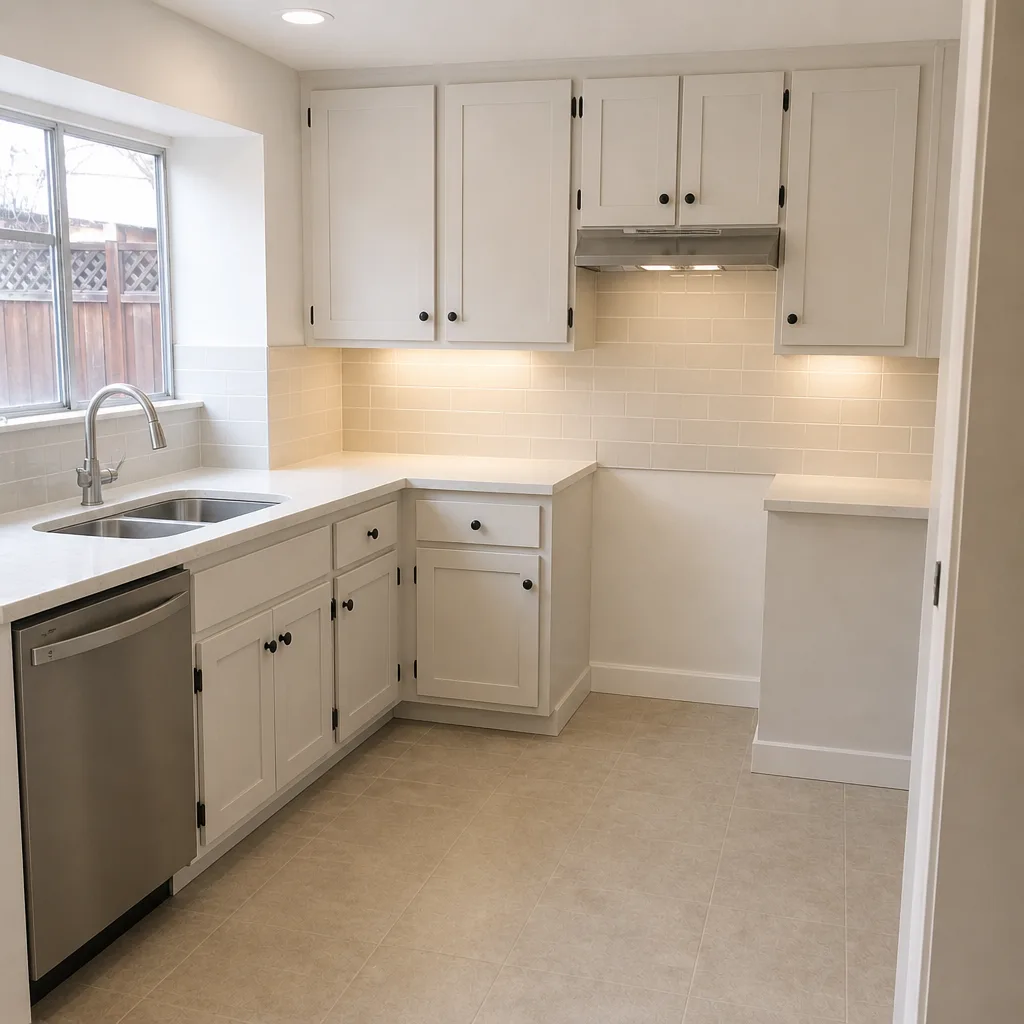
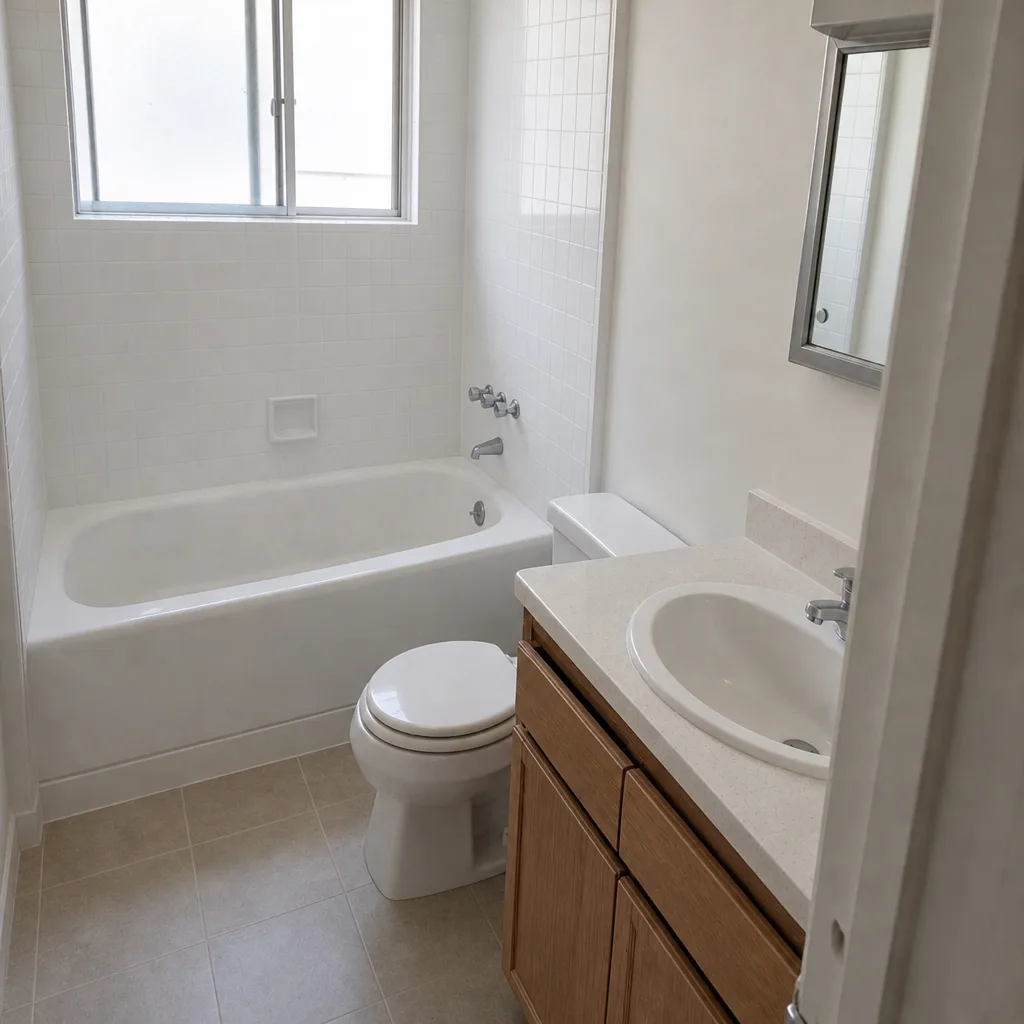
See the difference
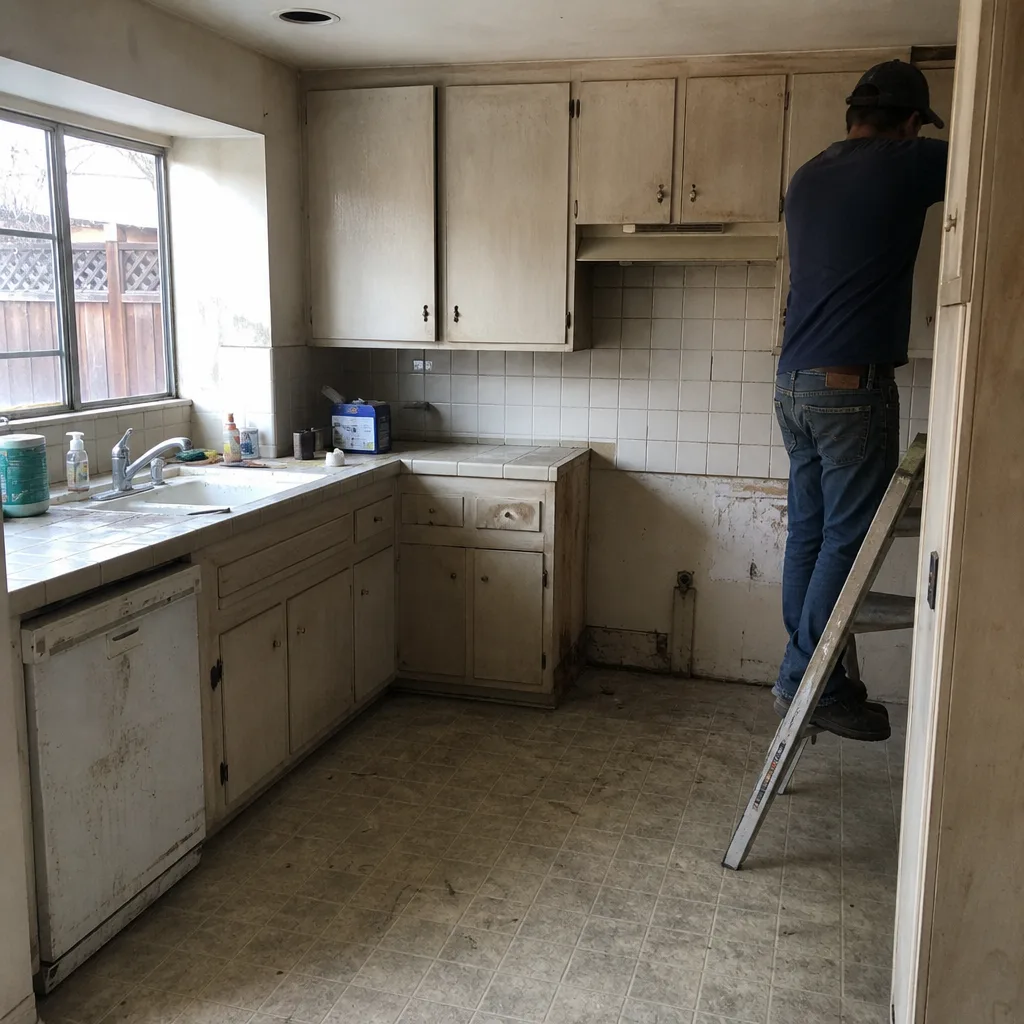 Before
 After
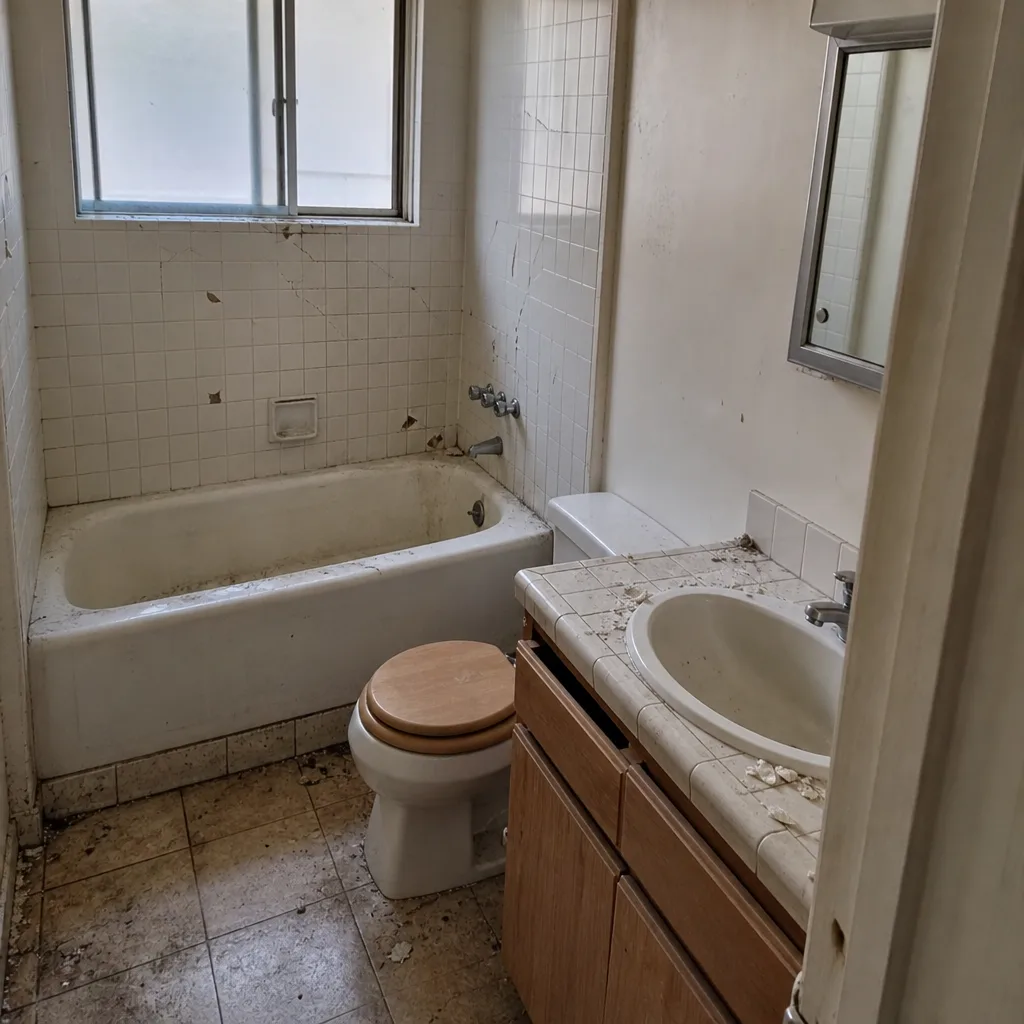 Before
 After
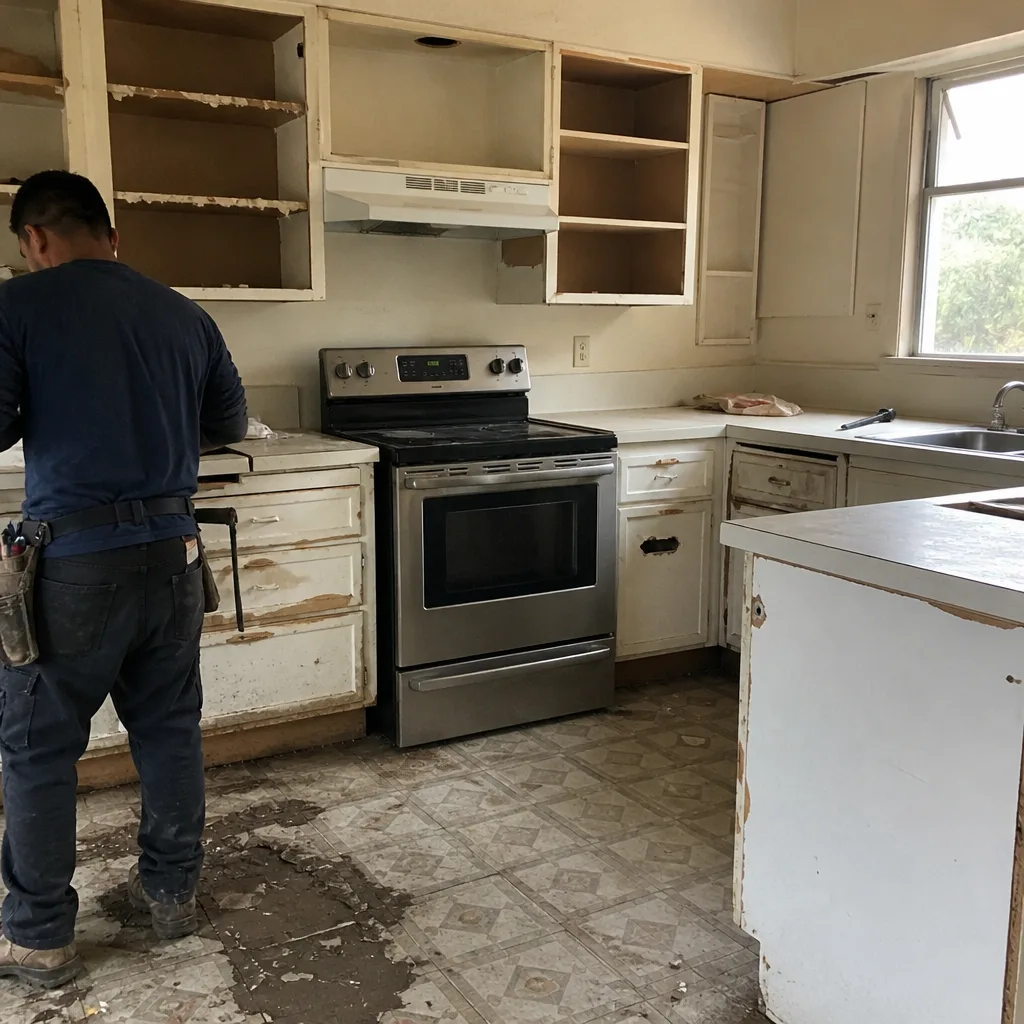 Before
 After
When to Call a Professional
Some bathroom work is genuinely a professional job, and the warning signs matter most when the work is least reversible. Call a licensed contractor for any project that touches plumbing, electrical, waterproofing, or structural framing. In a Sunnyvale bathroom, that’s essentially every full remodel. Call also if a prior contractor’s work is failing early, if a leak appeared after a recent remodel, or if you’re being handed a verbal price for work that’s already started. Penhallow Remodeling Sunnyvale offers free written estimates in Sunnyvale; call (888) 426-8719 to schedule one and hold the price and the promise in your hands before you sign anything.
Frequently Asked Questions
The biggest red flag is a contractor who won’t put the price and the guarantee in writing. Verbal pricing and an unwritten guarantee are signs the contractor is protecting themselves, not you, and they tend to reappear as cost overruns and unresolved defects later in the project.
A legitimate substrate surprise comes with photos, a specific scope and a written change order you approve before work continues. A bait-and-switch pattern involves a suspiciously low initial bid, an immediate “surprise” after demo, no documentation and a price that only moves in one direction. Call (888) 426-8719 for an honest written estimate in Sunnyvale.
Yes, Sunnyvale bathroom remodels that involve plumbing, electrical or structural work require permits and inspections. Unpermitted work can surface at resale, complicate insurance claims and leave you with the liability. A contractor who skips the permit is signaling that the rest of the job may be equally shortcut.
A legitimate written estimate should include line items for each phase, allowances with specific dollar caps, a list of exclusions, a written change-order process, material and brand specifications, a milestone-based payment schedule and the written guarantee. If the estimate is a single number, it isn’t really an estimate.
Most full bathroom remodels in Sunnyvale run several weeks depending on scope and permit timing. The warning sign isn’t the length of the schedule; it’s a crew that misses arrival windows without notice. Consistent, unmet windows usually mean the whole schedule is being managed on the fly. Call (888) 426-8719 for a written schedule with real arrival windows before you commit.
Yes. Every bathroom project is covered by the 365-Day Done Right Promise, backed in writing. If something covered fails within that window, we come back and fix it at no charge, with a free return visit and no service-call fee. Call (888) 426-8719 to see the written guarantee before you sign.
The Bottom Line
The warning signs that predict a bad bathroom remodel show up in the conversation, not the tile. A verbal price, a vague guarantee, a dodged permit question and a crew that won’t say who’s coming into your home: each one is a leading indicator, and each one is visible before you sign anything. Read contractor behavior, hold bids to what’s in writing, and make sure the price on day one is the price on the invoice. In Sunnyvale, where older homes and wet winters make bathrooms unforgiving, that discipline is the difference between a calm remodel and an expensive education. Call (888) 426-8719 for a free written estimate and a written guarantee before any work starts.
Written by the team at Penhallow Remodeling Sunnyvale.