Free written scope consultation - allowances, timeline, and change-order rules on paper before a single trade is scheduled
Quikrete Kitchen Remodeling: The Sunnyvale Owner’s Guide
Kitchen remodeling work involving Quikrete materials in Sunnyvale typically costs $14,000 – $45,000 installed, depending on layout, cabinet line and countertop material. Quikrete itself makes cementitious products (concrete mixes, mortars, patching compounds, setting beds), so the “Quikrete” part of your kitchen is almost always the substrate work: the mortar bed under floor tile, the patching compound behind a backsplash, or the concrete underlayment that cabinets and islands sit on. Owners usually discover a failure here the same way you just did: a hairline crack that spreads across grout, a tile that sounds hollow when tapped, a base cabinet that has started to rock, or a backsplash corner that has pulled away from the wall.
We’re Penhallow Remodeling Sunnyvale, and we handle this kind of substrate and finish work across Sunnyvale. We are an independent remodeling company, not affiliated with Quikrete, and we don’t stock or carry parts on a truck. What we do is diagnose what failed, quote a written number before any work begins, and back the repair with a written guarantee.
Key takeaways
- Quikrete failures in a kitchen are nearly always substrate failures: setting beds, patching compounds and concrete underlayment.
- Installed kitchen remodel pricing in Sunnyvale: $14,000 – $45,000; a targeted substrate repair is far less.
- We give a written price before any work starts, so day-one and invoice-day match.
- Every repair carries the 365-Day Done Right Promise in writing.
- Call (888) 426-8719 for a free estimate.
Which Quikrete Models This Applies To
Quikrete’s kitchen-relevant line is broader than most homeowners expect, and the exact product matters. The ones we see in Sunnyvale kitchens most often:
- Quikrete Concrete Mix (the 5000 and 4000 psi bags): used for slab patches, island block-outs and thresholds.
- Quikrete Sand/Topping Mix: the setting bed under floor tile and the base for a mortar-bed countertop.
- Quikrete Vinyl Concrete Patcher and Concrete Resurfacer: thin patching of spalled concrete floors before tile or floating floors.
- Quikrete Fast-Setting variants and Quikrete Anchoring Cement: island anchoring, post bases, appliance blocking.
- Quikrete Mortar Mix (N and S): brick, block and backsplash bonding where the wall is masonry.
Identifying the right product starts at the bag, not the label on your receipt. Find the original bag or the contractor’s spec sheet and read the psi rating (concrete) or the mortar type (N vs S). A Type N mortar (about 750 psi) is fine for interior backsplash bonding; Type S (about 1,800 psi) is the one you want where any lateral load hits, like an island. Get that wrong and you get cracking within a year.
The OEM-versus-aftermarket call for Quikrete is different from most parts pages. There’s no proprietary connector or serial-matched component; Quikrete is a commodity mix. That means you have real options: another bagged mix of equal or higher psi from a recognized brand, mixed and placed to the same spec, is functionally equivalent. What’s not equivalent is a cheaper bag with a lower psi rating or a fast-set mix used where standard cure time was specified. We source recognized materials and tell you exactly which bag and which rating we’re using before we open it. If your project calls for cabinetry, counters or tile, we draw from KraftMaid, Cambria, Silestone and comparable trade lines so the finish matches the substrate behind it.
Styles & brands we work with
- Kitchen remodeling
- Bathroom remodeling
- Home additions & ADU
- Roofing
- Windows & doors
- Driveway & pavers
- Fence
Signs Your Quikrete Kitchen Remodeling Is Failing
Sunnyvale’s climate makes one failure pattern especially common: our winters are wet, our summers dry, and that wet-dry cycling works on cementitious materials year after year. Here’s what to look for.
- Hollow-sounding tile when you tap it. The setting bed has debonded from the slab or the tile from the bed. If it’s isolated, a tap-test with a screwdriver handle tells you how far the dead zone extends.
- Hairline cracks in grout that keep returning. Grout itself rarely fails; the movement is in the substrate below. Re-grouting without addressing the bed is a temporary fix that comes back within a season.
- Base cabinets that rock or show a gap at the floor line. A patched concrete floor or anchor block has shifted or crumbled under the cabinet leg. This is a real safety issue if the cabinet holds a cooktop.
- A backsplash pulling away at a corner or the range cut-out. Usually the mortar behind it has lost bond, most often where heat or moisture reached the Type N bed.
- Powdery or flaking concrete under the cabinet toe-kick. This is spalling, and it usually starts where a thin patch was applied over a dirty or damp slab.
If you see any of these on a kitchen island or under an appliance, stop using the area and have it inspected. A failed substrate under a heavy island is not the place to guess.
See the difference
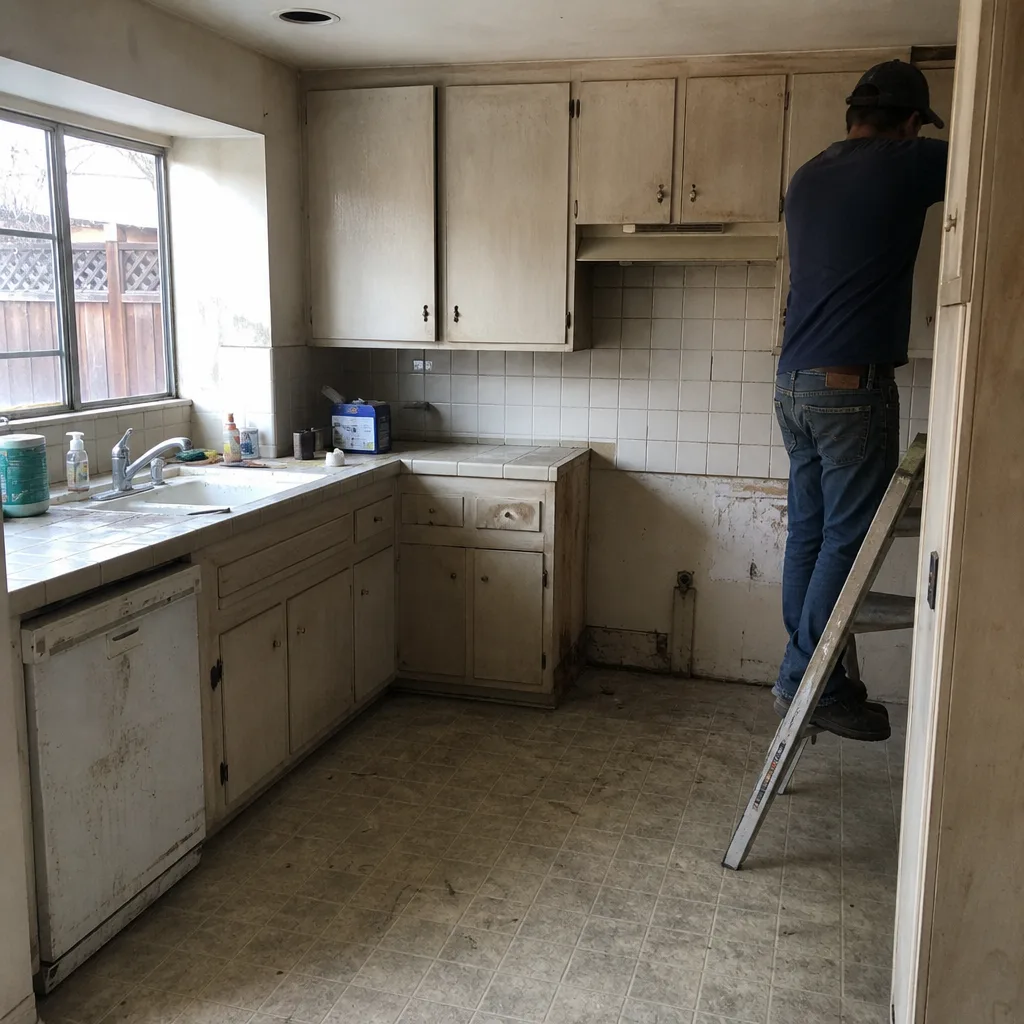 Before
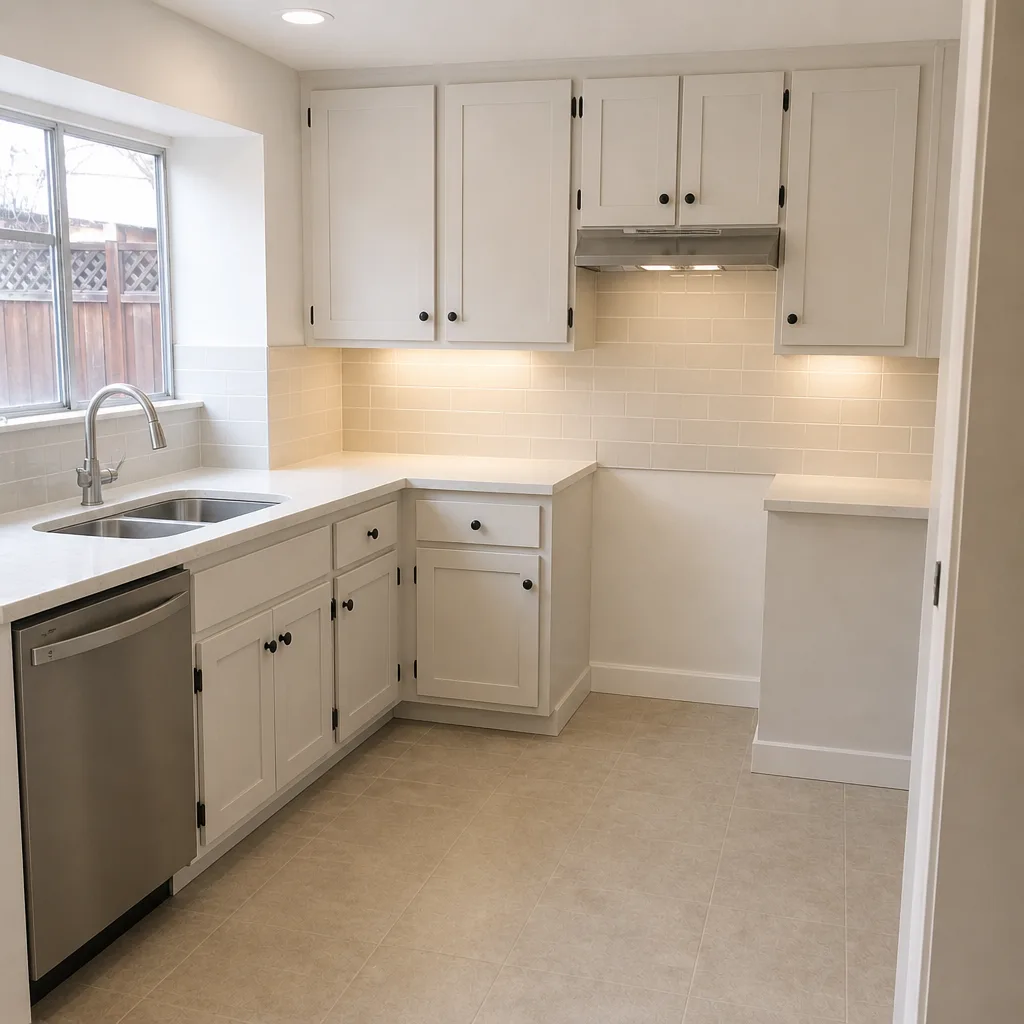 After
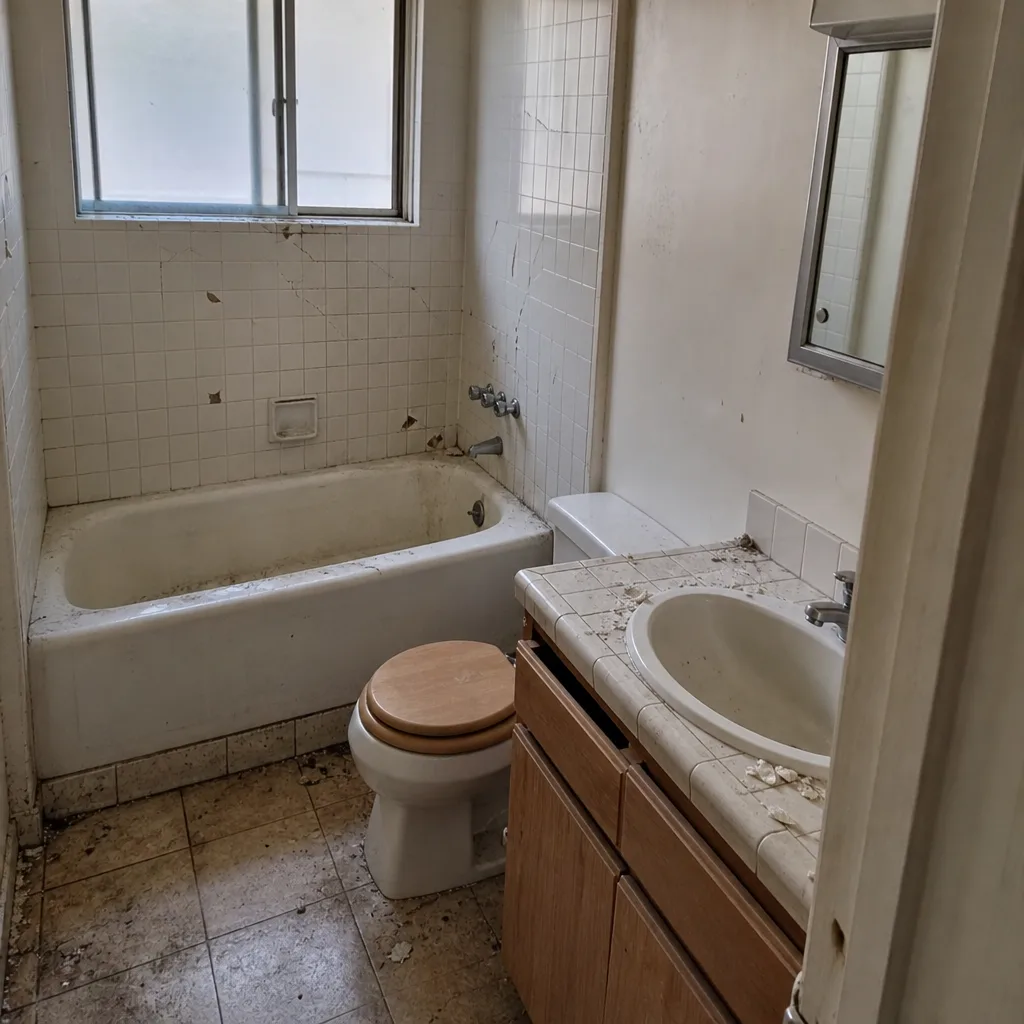 Before
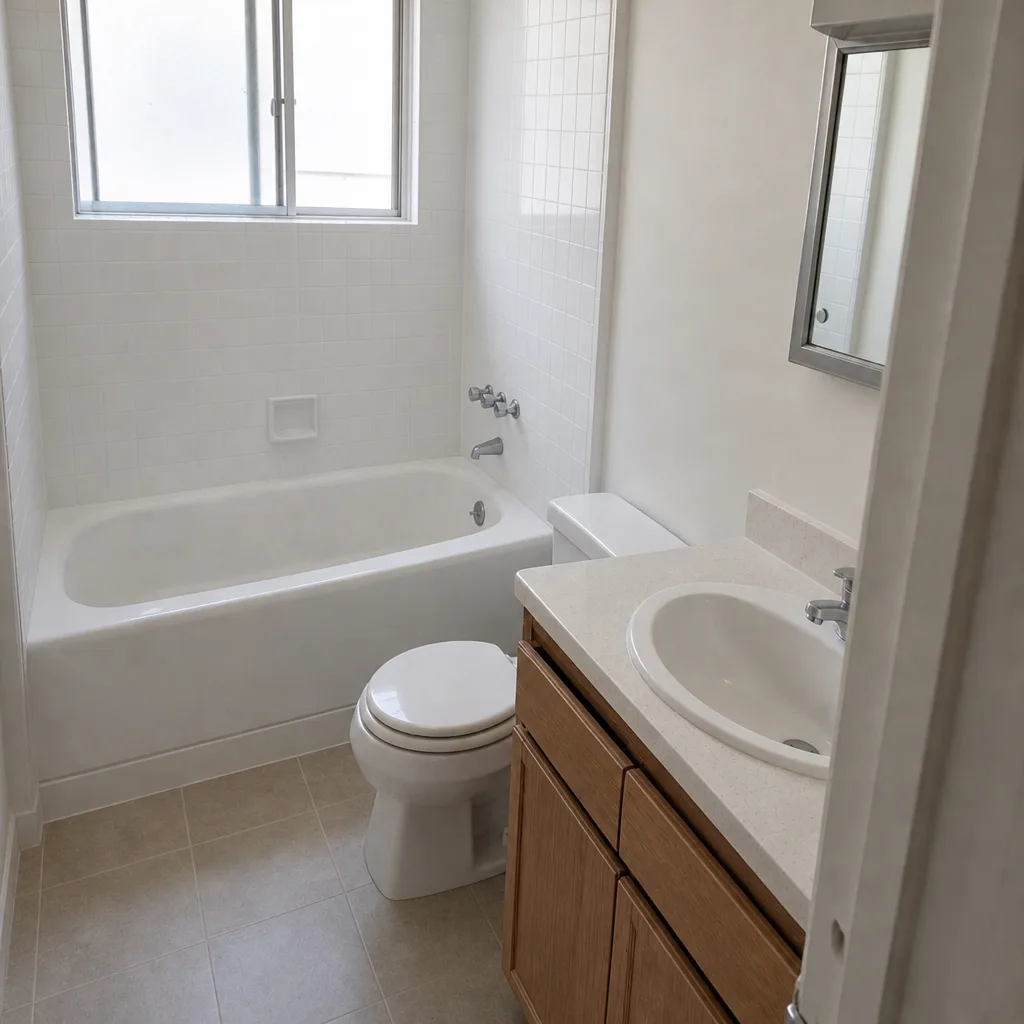 After
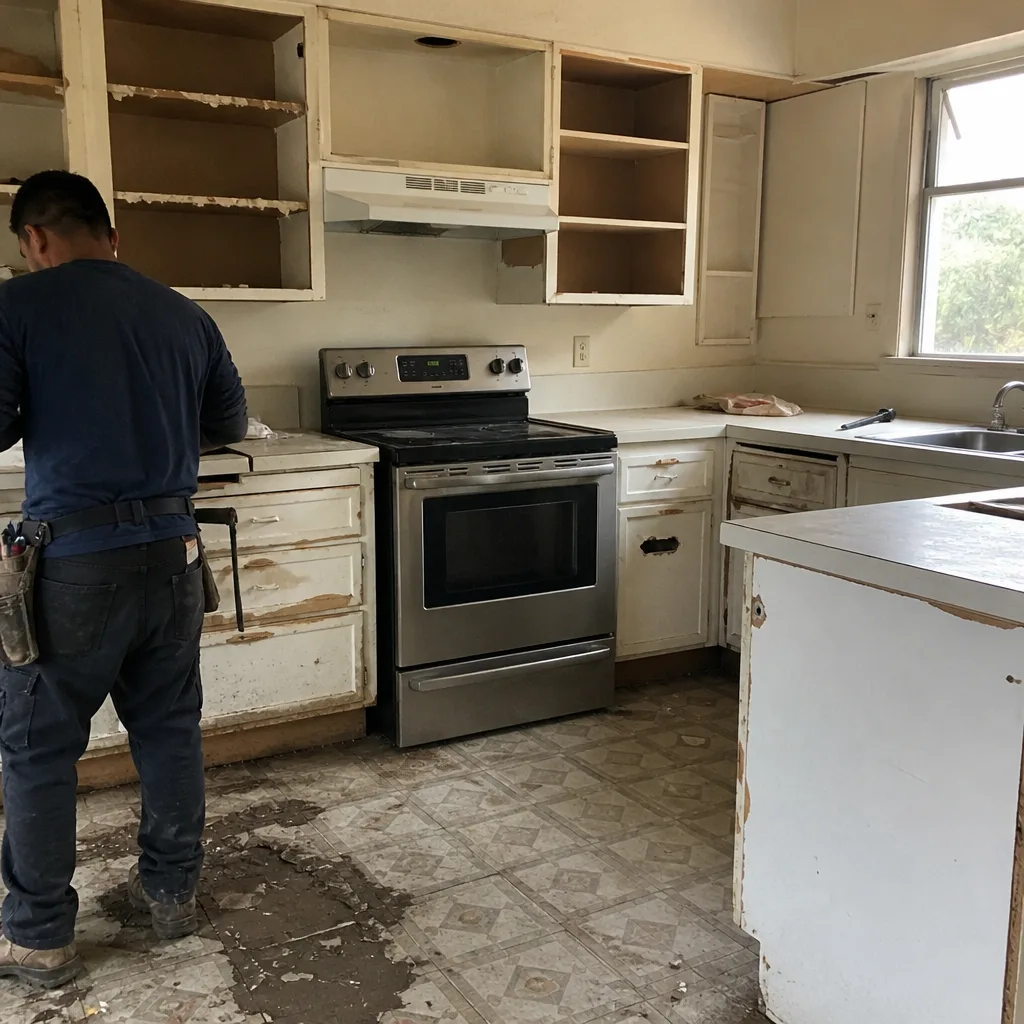 Before
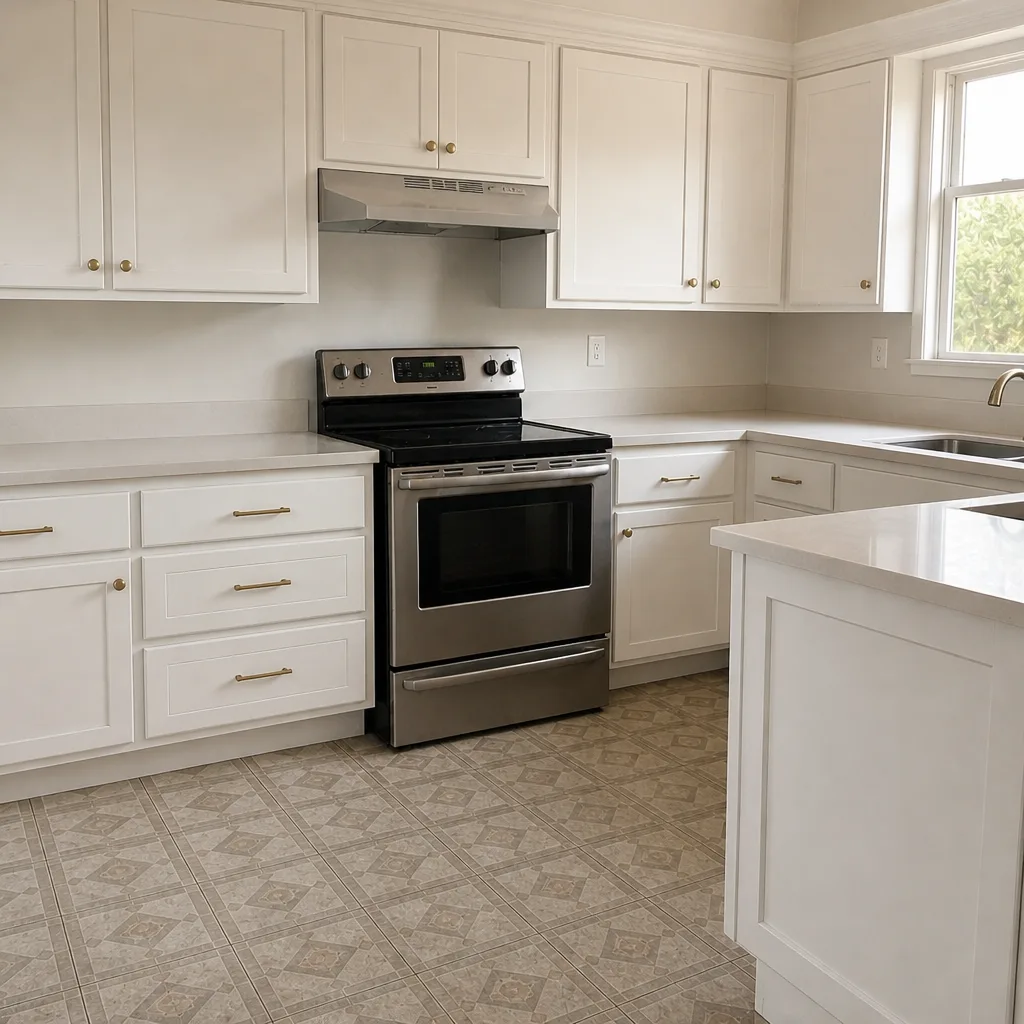 After
Replacement Cost & What’s Included
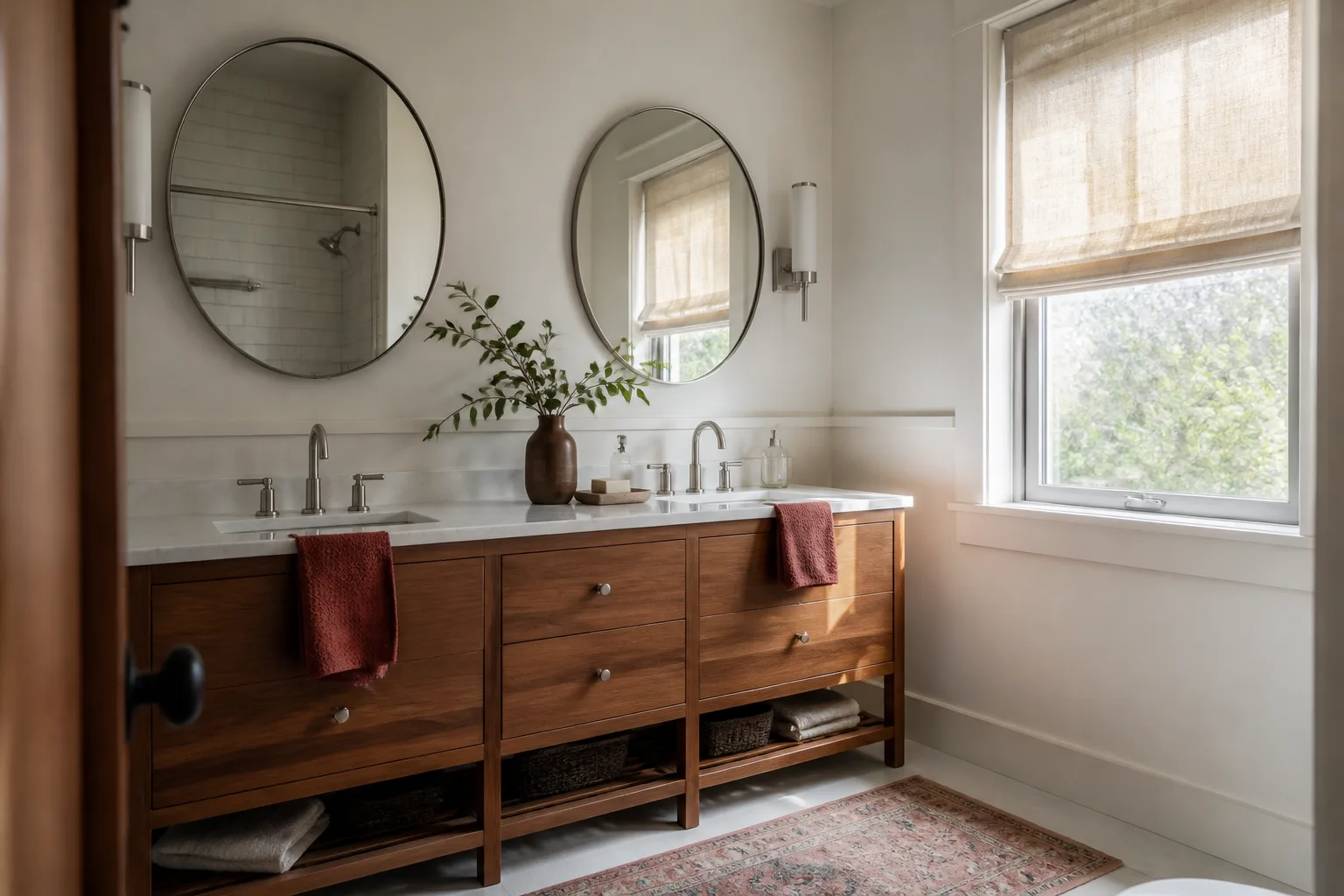
Full kitchen remodeling in Sunnyvale runs $14,000 – $45,000. Smaller-scope kitchen remodels run $9,000 – $20,000. The substrate work itself is a much smaller line: setting beds, slab patching and anchoring typically land between $800 and $3,500 depending on square footage and access. If the failure has spread to a countertop or cabinet, those carry their own ranges: countertop installation $2,000 – $6,500, backsplash $800 – $2,500, kitchen island $3,000 – $10,000, and cabinet installation $4,000 – $13,000.
What drives the number up or down:
- Access. A setting bed under an island is a different job than one under an empty floor.
- Type of mix. Standard cure vs fast-set, and psi rating.
- Finish. Remove-and-replace the same tile vs a new finish and new grout.
- Hidden damage. Once we open the bed, we may find the slab itself needs patching.
Every job gets a written price before any work starts, plus a written guarantee on the repair. The 365-Day Done Right Promise means if the repair fails inside the guarantee period, we come back and fix it at no charge, with no re-inspection fee. Materials we install, including Cambria quartz, carry their own manufacturer warranties alongside ours.
DIY or Call Us?
Some of this is safe to check yourself. None of it is safe to repair on your own if a heavy island, cabinet run, or appliance is involved. A failed substrate under a loaded kitchen element is a structural problem, and the risk isn’t just a wobbly cabinet, it’s a falling cabinet or a cracked cooktop cut-out. That’s where we want a background-checked, uniformed technician, not a bag of patching compound and a weekend.
Safe to do yourself:
- Tap-test tile with a screwdriver handle to map the dead zones.
- Photograph cracks, hollow spots and gaps.
- Locate your original bags or the contractor spec sheet.
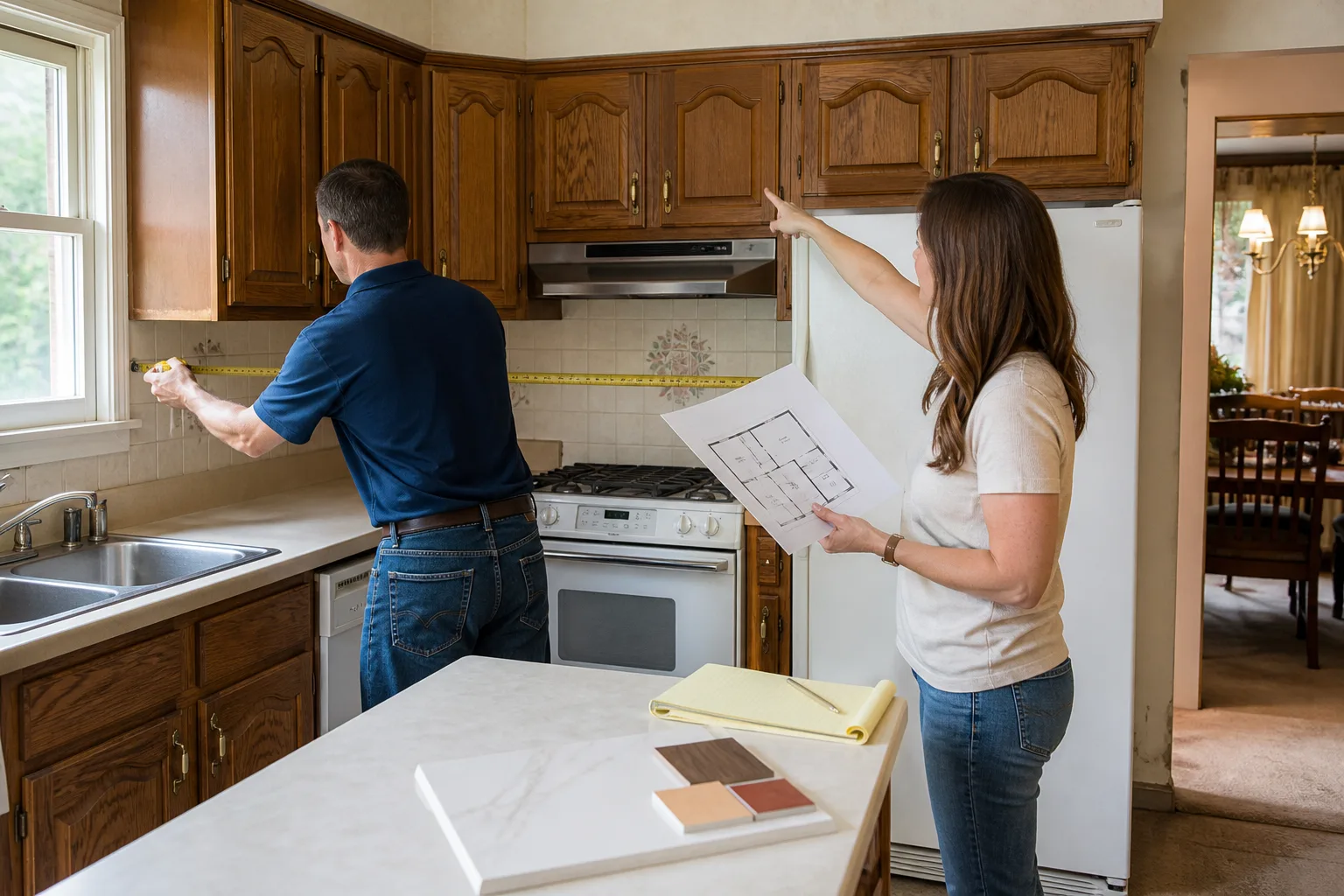
- Measure the affected area.
Where DIY goes wrong:
- Applying a thin patch over a dirty or damp slab (guaranteed spall).
- Using Type N where Type S is needed.
- Fast-set mix in a spot that needed standard cure.
- Re-grouting over a live crack without fixing the bed.
Call (888) 426-8719 for a free estimate. A real person answers 24/7, and we’ll give you a written number before any work begins.
FAQs

A properly installed, fully cured cement bed under kitchen tile should last 20+ years in a Sunnyvale interior. Indoors there’s no direct weather exposure, so the failure usually comes from the original install (wrong type, poor bond, uncured fast-set) rather than climate. Out on a slab or patio edge, expect closer to 10 – 15 years before wet-dry cycling starts showing cracks. Call (888) 426-8719 for a free estimate on a repair.
Yes, often. If the failure is isolated (one tile, one island base, a backsplash corner), a targeted repair beats full demolition. If the dead zone covers more than about a third of the floor area, we usually recommend full replacement because patching over a failing bed just moves the problem. We’ll tell you which case you’re in after a free inspection.
A localized substrate repair typically takes a half day to two days, including cure time, depending on the mix. Full floor setting-bed replacement runs three to five days because cure time matters and can’t be rushed. We give you a defined arrival window and a written completion date before we start, so you can plan around your kitchen being out of use.
We buy from recognized suppliers and specify the exact bag, psi rating, or mortar type in writing before we open it. We don’t stock bags on a truck and we don’t pretend to; we order what the job needs and tell you which one it is. If you want to see the spec, ask, and it’s on your quote.
Written by the team at Penhallow Remodeling Sunnyvale, serving Sunnyvale and nearby areas.